Autonomous driving 2026. The phrase itself conjures images straight out of science fiction: sleek vehicles gliding silently through cityscapes, completely devoid of human intervention, transforming our commutes and our cities overnight. Yet, for many, the reality of autonomous driving in 2026 feels a confusing mix of sensational headlines, technological breakthroughs, and unsettling safety incidents. Are we on the cusp of a fully driverless future, or is it still decades away? The disparity between public perception and the actual state of the technology often leads to frustration and misunderstanding.
This article aims to cut through the hype and the fear, offering a clear, grounded perspective on where autonomous driving truly stands in 2026. We’ll demystify the jargon, explain what’s actually available on public roads, and equip you with the knowledge to realistically assess the capabilities and limitations of self-driving technology today. By the end, you’ll understand not just what autonomous vehicles can do, but how to evaluate them responsibly, separating the facts from the pervasive myths.
How to Decode Levels of Autonomous Driving
Understanding autonomous driving in 2026 begins with clarifying the different levels of automation. The Society of Automotive Engineers (SAE) International has established a widely accepted standard, categorizing driving automation into six levels, from 0 to 5. These levels define the extent to which a vehicle can control itself and where human attention is required.
- Level 0: No Automation. The human driver does everything. Examples include older cars without any driver assistance features.
- Level 1: Driver Assistance. The vehicle has either steering or acceleration/braking assistance, but not both simultaneously. Features like adaptive cruise control or lane-keeping assist (which only steers) fall into this category. The human driver monitors the driving environment and performs all other driving tasks.
- Level 2: Partial Driving Automation. The vehicle can control both steering and acceleration/braking simultaneously under specific conditions. Examples include advanced adaptive cruise control combined with lane-centering systems. Critically, the human driver must constantly supervise the system and be ready to take over at any moment. Most advanced driver-assistance systems (ADAS) available in consumer vehicles today, such as Tesla’s Autopilot, General Motors’ Super Cruise, and Ford’s BlueCruise, operate at Level 2. These systems are impressive but demand continuous driver engagement and responsibility. For autonomous driving 2026, Level 2 remains the predominant form of automation in privately owned cars.
- Level 3: Conditional Driving Automation. This is where things get significantly more complex and contentious. At Level 3, the vehicle can perform all driving tasks under specific conditions, and the human driver does not need to constantly monitor the driving environment. However, the system will request the human driver to take over when it encounters a situation it cannot handle (a “takeover request”). The driver must be ready to intervene within a few seconds. The challenge here lies in the handover process – ensuring the human is alert and ready to resume control safely. Regulatory hurdles and the immense safety burden make widespread Level 3 deployment cautious. In 2026, a few limited Level 3 systems exist, primarily in specific markets (e.g., Mercedes-Benz DRIVE PILOT in certain areas of Germany and Nevada) for traffic jam pilot scenarios on specific highways, but they are far from common.
- Level 4: High Driving Automation. The vehicle can perform all driving tasks and monitor the driving environment within specific operational design domains (ODDs). An ODD defines the specific conditions (e.g., geographical area, road type, speed range, weather) under which the system is designed to function. If the vehicle exits its ODD, or encounters a situation it cannot handle, it will safely pull over or come to a stop if the driver doesn’t take over. Human intervention is generally not required within the ODD. Robotaxis operating in geo-fenced areas are the primary examples of Level 4 systems available today.
- Level 5: Full Driving Automation. The vehicle can perform all driving tasks under all conditions, human intervention is never required. This is the “set it and forget it” dream, essentially a car without a steering wheel or pedals. Level 5 vehicles are still in research and development, and are not expected to be commercially available in 2026 or for many years to come.
Crucially, when discussing autonomous driving 2026, the vast majority of consumer vehicles feature Level 2 systems. Level 3 is nascent and extremely limited, while Level 4 is confined to specific commercial applications. Level 5 remains a distant future.
How Autonomous Driving Is Deployed on Public Roads in 2026
The reality of autonomous driving deployment in 2026 is far more nuanced than many imagine. It’s not a universal rollout but rather a patchwork of specialized applications and advanced driver-assist features.
The most visible manifestation of higher-level autonomy (Level 4) comes in the form of robotaxi services. Companies like Waymo and Cruise (though Cruise has faced significant challenges and scaled back operations) operate fully driverless vehicles in specific, geo-fenced areas of certain cities. For instance, Waymo offers rides to the public in parts of Phoenix, San Francisco, and Los Angeles. These services are limited to designated zones, often operate at specific times, and typically avoid extreme weather conditions. They represent the cutting edge of driverless technology, but their operational domain is highly constrained. The vehicles operate without a safety driver, making them truly autonomous within their ODD.
Beyond robotaxis, highway assist features represent the most advanced consumer-facing Level 2 and nascent Level 3 systems. These systems allow for hands-free driving on specific, pre-mapped highways, sometimes even permitting the driver to look away from the road (though always requiring readiness to take over). General Motors’ Super Cruise, Ford’s BlueCruise, and Mercedes-Benz’s DRIVE PILOT are prime examples. DRIVE PILOT, as mentioned, is a rare Level 3 system, which allows for “eyes-off” driving in traffic jams on specific German and Nevada highways, but still requires the driver to be present and able to take over when prompted. These systems are sophisticated but are designed for particular environments where the variables are more controlled than urban driving.
The broadest deployment of autonomous features in consumer cars falls under advanced driver-assist systems (ADAS), which are primarily Level 2. These include:
- Adaptive Cruise Control (ACC): Automatically adjusts vehicle speed to maintain a safe distance from the car ahead.
- Lane Keeping Assist (LKA) / Lane Centering Assist (LCA): Helps keep the vehicle within its lane markings.
- Automatic Emergency Braking (AEB): Detects potential collisions and applies the brakes if the driver doesn’t respond.
- Blind Spot Monitoring (BSM): Warns the driver of vehicles in their blind spots.
- Parking Assist: Can steer the car into a parking spot, with the driver typically controlling acceleration and braking.
While these features significantly enhance safety and convenience, they are aids to the human driver, not replacements. Human supervision is still required for all Level 2 systems. The driver remains fully responsible for monitoring the environment, intervening when necessary, and ultimately, for the safe operation of the vehicle. Misunderstanding this crucial distinction is a common source of accidents and over-reliance on technology. For Level 3 systems, even when the system is in control, the driver must remain in the driver’s seat and be ready to take over.
In 2026, the landscape is one of carefully controlled, incremental deployment. Full autonomy across all conditions remains a distant goal, with current deployments strategically focused on maximizing safety and utility within well-defined operational limits.
How Autonomous Driving Systems Actually See and Decide
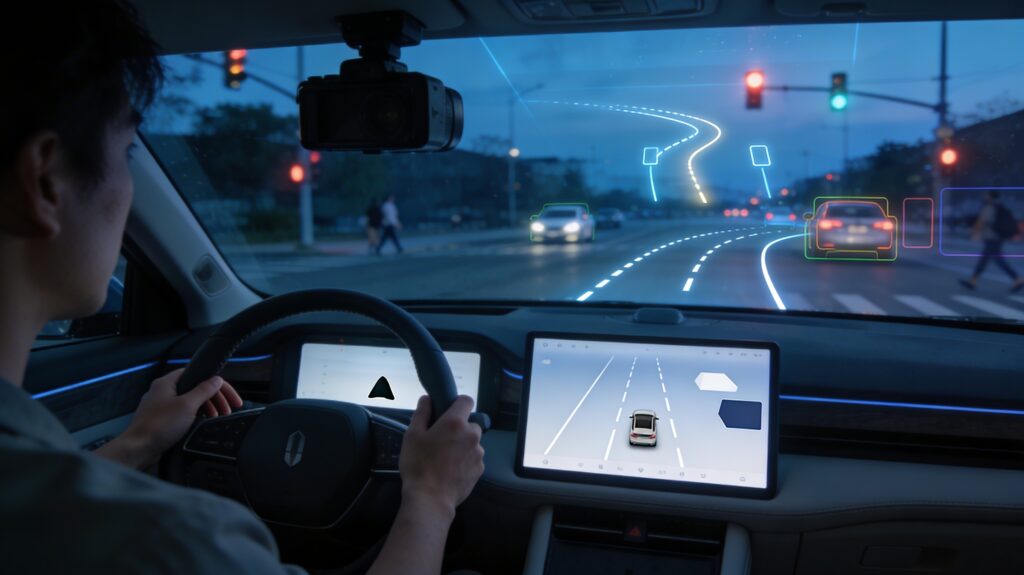
To understand the limitations and capabilities of autonomous driving systems, it’s essential to grasp, at a high level, how they perceive their surroundings and make decisions. These vehicles are essentially sophisticated robots on wheels, relying on a complex interplay of sensors, high-definition maps, and artificial intelligence.
The primary “senses” of an autonomous vehicle are:
- Cameras: These are the “eyes” of the car, providing visual data similar to what a human sees. They are crucial for detecting traffic lights, lane markings, pedestrians, other vehicles, and road signs. Cameras are cost-effective and provide rich visual information, but their performance can be hindered by poor lighting, heavy rain, or fog.
- Lidar (Light Detection and Ranging): Lidar systems emit laser pulses and measure the time it takes for them to return, creating a precise 3D map of the environment. This “point cloud” data is excellent for measuring distances and detecting objects, regardless of lighting conditions. However, lidar can be affected by heavy rain or snow, and the sensors are generally more expensive than cameras.
- Radar (Radio Detection and Ranging): Radar emits radio waves and measures their reflections to determine the speed and distance of objects. It’s particularly good at penetrating adverse weather conditions (rain, fog, snow) and measuring object velocity accurately. Radar is less precise than lidar for object shape and classification but excels at long-range detection and speed tracking.
- Ultrasonic Sensors: These short-range sensors use sound waves to detect nearby objects, primarily used for low-speed maneuvers like parking and blind-spot detection.
These sensors work in concert, providing redundant and complementary data. For example, a camera might identify a pedestrian, while lidar confirms their distance and radar tracks their speed.
Beyond the real-time sensor data, autonomous vehicles rely heavily on high-definition (HD) maps. These are incredibly detailed, pre-built maps that contain information down to lane markings, traffic light locations, curb heights, and even the precise location of road signs. The HD map acts as a foundational understanding of the environment, allowing the vehicle to localize itself with centimeter-level accuracy and anticipate what’s ahead.
All this raw data—from cameras, lidar, radar, and the HD map—is fed into the vehicle’s “brain”: the Artificial Intelligence (AI) system. This AI, often powered by deep learning algorithms, performs several critical functions:
- Perception: It processes sensor data to identify and classify objects (cars, pedestrians, cyclists, traffic cones), estimate their speed and trajectory, and understand the road environment.
- Prediction: Based on the perceived environment, it predicts the likely actions of other road users (e.g., a pedestrian might step into the road, a car might change lanes).
- Planning: Using perception and prediction, the AI plans the vehicle’s trajectory, deciding on acceleration, braking, steering, and lane changes to reach its destination safely and efficiently.
- Control: It then translates these plans into actual commands for the car’s actuators (steering wheel, accelerator, brakes).
The limitations of autonomous driving systems stem directly from these components. Sensors can be fooled or obscured. AI models, while powerful, are trained on vast datasets and can still encounter “edge cases”—situations they haven’t been specifically trained for, leading to unpredictable behavior. The accuracy and currency of HD maps are also critical; unexpected road construction or temporary changes can pose significant challenges. Understanding these fundamental mechanisms helps to appreciate why full autonomy is so difficult and why human supervision remains vital for most autonomous driving 2026 applications.
How Regulations and Safety Incidents Shape Autonomous Driving 2026
The path of autonomous driving in 2026 is not solely paved by technological advancements; it’s also heavily shaped by the complex interplay of regulations, public perception, and, significantly, safety incidents. Each incident, whether minor or tragic, becomes a focal point for scrutiny, influencing policy, slowing rollouts, and guiding the future direction of the technology.
Regulators worldwide are grappling with how to oversee a rapidly evolving technology that challenges existing legal frameworks. Unlike traditional vehicles, where the human driver is always ultimately responsible, autonomous systems introduce a new layer of accountability. Who is at fault when an autonomous vehicle is involved in a collision? Is it the software developer, the vehicle manufacturer, the fleet operator, or even the passenger? These are complex questions with no easy answers, leading to a cautious, often reactive, regulatory environment.
Safety incidents, even rare ones, have a profound impact. A highly publicized crash involving an autonomous vehicle or a robotaxi system can immediately trigger investigations, temporary suspensions of operations, and calls for stricter oversight. For example, in late 2023, a significant incident involving a Cruise robotaxi in San Francisco led to the suspension of their California operations and a broader re-evaluation of their deployment strategy. Such events, while unfortunate, serve as critical learning opportunities, forcing developers to refine their systems and regulators to establish clearer guidelines. They highlight the immense responsibility involved in deploying technology that directly impacts public safety.
The regulatory landscape for autonomous driving 2026 is highly fragmented and differs significantly by region:
- United States: There is no single federal framework for autonomous vehicles. Instead, states largely regulate their operation, leading to a patchwork of laws and permitting requirements. Some states, like California and Arizona, have been more permissive, allowing for extensive testing and commercial robotaxi operations. Others are far more cautious. Federal agencies like the National Highway Traffic Safety Administration (NHTSA) primarily focus on vehicle safety standards and investigations into incidents.
- Europe: The European Union is working towards a more harmonized approach, with regulations like the new EU Type Approval framework for automated vehicles laying the groundwork for Level 3 and Level 4 systems. Individual member states also have their own specific laws. Germany, for instance, has been a leader in establishing a legal framework for Level 3 systems.
- Asia: Countries like China and Japan are also making rapid strides, often with significant government backing. China, in particular, has seen rapid expansion of autonomous vehicle testing and deployment in designated zones, often with a focus on specific use cases like logistics and ride-hailing.
This regional variation means that what is permissible and available in one country or even one state may not be in another. This lack of global standardization adds complexity for manufacturers and can slow the overall pace of deployment. The constant tension between fostering innovation and ensuring public safety means that autonomous driving 2026 will continue to be a carefully managed, often iterative, rollout, with regulations evolving in response to both technological progress and real-world experience.
How Autonomous Driving Could Affect Jobs and Cities
While the vision of a fully autonomous future still feels distant in 2026, the incremental advancements in autonomous driving technology are already beginning to ripple through various sectors, with potential impacts on jobs and urban design. It’s crucial to consider these effects realistically, avoiding both utopian predictions and alarmist warnings.
In the job market, the most direct impact is expected on roles involving professional driving. This includes:
- Long-haul trucking: Autonomous trucks could potentially operate for longer hours without fatigue, leading to increased efficiency. However, the complete displacement of human drivers is unlikely in the near term. Instead, we might see a shift towards roles focused on fleet management, remote supervision of autonomous vehicles, maintenance, and “first-mile/last-mile” human-driven segments where complex urban environments still require human navigation.
- Ride-hailing and taxi services: Robotaxi deployments, while limited in 2026, demonstrate the potential for driverless ride services. As these services expand, the demand for human drivers in these specific geo-fenced areas could decrease. However, human-driven services will likely continue to thrive in regions or conditions where autonomous systems are not yet viable or preferred.
- Delivery services: Autonomous delivery vehicles, from small robotic sidewalk delivery units to larger vans, are being tested. This could impact delivery driver jobs, especially for predictable routes. Again, hybrid models, where humans handle complex deliveries and autonomous systems manage simpler ones, are more probable in the near term.
It’s important to remember that these changes are gradual. The widespread economic impact on jobs is a longer-term concern, and new jobs in maintenance, cybersecurity, data analysis, and infrastructure development specifically for autonomous systems are also emerging.
For cities and urban design, the potential long-term effects are profound, though mostly aspirational for 2026:
- Reduced parking needs: If autonomous vehicles are shared (e.g., robotaxis) and can continuously circulate or park themselves efficiently in designated hubs outside prime areas, cities might see a dramatic reduction in the need for urban parking spaces. These spaces could then be repurposed for housing, green areas, or pedestrian zones.
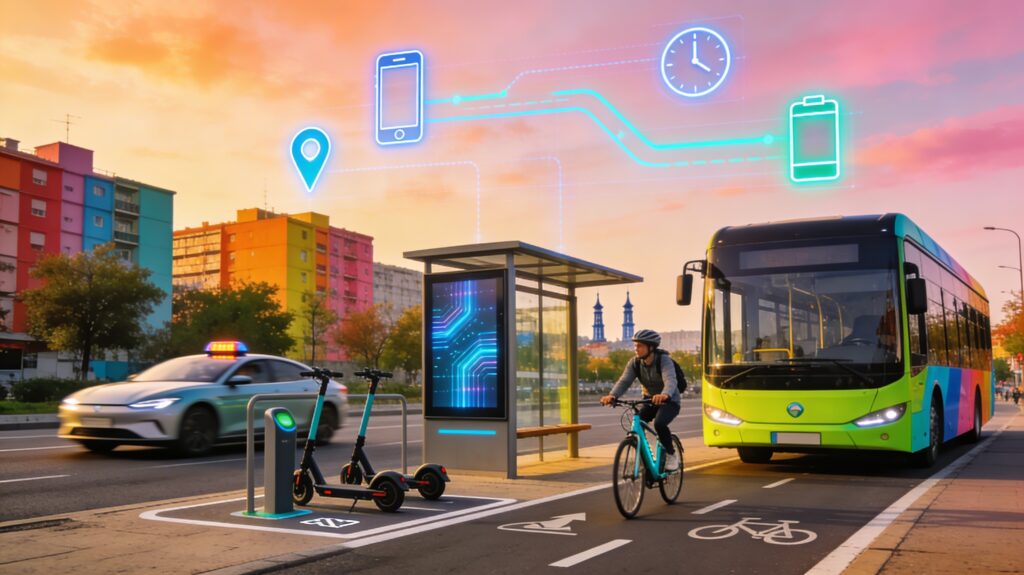
- Optimized traffic flow: Autonomous vehicles, communicating with each other and with smart city infrastructure, could theoretically lead to smoother traffic flow, fewer accidents, and reduced congestion by optimizing speeds and minimizing sudden braking. This could reduce commute times and improve air quality.
- Changes in public transportation: Autonomous shuttles and buses could enhance public transit options, especially in underserved areas, by offering more flexible and on-demand services.
- Accessibility: Autonomous vehicles could offer unprecedented mobility for individuals who cannot drive due to age, disability, or other factors, significantly increasing their independence and access to services.
In 2026, these urban transformations are still largely theoretical. The current deployments are too limited to effect widespread change. However, city planners and policymakers are already beginning to consider these possibilities, planning for future infrastructure and zoning adjustments that could accommodate a more autonomous future. The immediate impact of autonomous driving 2026 on jobs and cities is more about pilot programs and strategic planning than sweeping societal shifts.
How to Evaluate Autonomous Features When Buying a Car in 2026
For car buyers in 2026, understanding the reality of autonomous features is paramount to making an informed decision and ensuring safe operation. The marketing often uses terms that can be misleading, blurring the line between driver assistance and full self-driving. Here’s a checklist to help you evaluate autonomous features realistically:
- Understand the SAE Level:
- Almost all consumer cars in 2026 are Level 2. This means the system helps with steering and acceleration/braking, but you must keep your hands on the wheel (or be ready to take over immediately) and your eyes on the road. Do not confuse Level 2 with full self-driving.
- Level 3 systems are extremely rare and limited. If a car claims Level 3, verify its specific operational design domains (ODDs)—where, when, and under what conditions it can operate. For example, it might only work on specific highways in traffic jams below a certain speed. Even then, you must remain in the driver’s seat and be ready to take over when prompted.
- Level 4 and 5 are not available in consumer cars in 2026.
- What the System Can and Cannot Do (Its Limitations):
- Read the manual thoroughly. Don’t rely solely on salesperson descriptions or online videos. The owner’s manual will detail the exact capabilities and, more importantly, the limitations of the system.
- Ask specific questions: Can it handle unprotected left turns? Does it work in construction zones? What about heavy rain, snow, or fog? Does it recognize traffic lights and stop signs reliably? (Many Level 2 systems do not fully handle these without driver intervention).
- Be wary of exaggerated claims. If it sounds too good to be true, it probably is.
- Where It Is Officially Supported (Operational Design Domain – ODD):
- Geo-fencing: Many advanced Level 2 and Level 3 systems only work on pre-mapped roads, often highways. Verify if the roads you frequently drive are covered.
- Environmental conditions: Does the system function reliably in all weather conditions, or is its performance degraded in rain, snow, or bright sunlight?
- Speed limitations: Some systems only work below a certain speed or within a specific speed range.
- How the Car Communicates Handover and Limits:
- Clear alerts: When the system needs you to take over (a “disengagement”), how does it alert you? Is it an audible chime, a visual warning on the dashboard, haptic feedback through the steering wheel, or a combination?
- Timeliness: How much time does the system give you to react and take control? For Level 2, this is instantaneous; for Level 3, it’s typically a few seconds.
- System status: Is it always clear when the system is active, what features are engaged, and when it’s just providing assistance versus actively driving? Look for intuitive visual indicators.
- Emphasize Reading Manuals and Testing Features Responsibly:
- Hands-on testing: If possible, test drive a car with the features in a safe, controlled environment. Understand how it feels when the system engages and disengages.
- Start slow: When you first get a car with these features, use them incrementally. Don’t immediately trust them in complex or high-stress situations.
- Stay engaged: Always remember that you are the ultimate safety driver for Level 2 and Level 3 systems. Never use your phone, read, or sleep when these systems are active.
- Report issues: If you encounter unexpected behavior, report it to the manufacturer or dealership.
By adopting this critical approach, car buyers can move beyond marketing hype and truly understand what they are getting with autonomous driving features in 2026, ensuring both their safety and realistic expectations.
How to Stay Realistic About Autonomous Driving in 2026
As we’ve explored, the landscape of autonomous driving in 2026 is one of remarkable technological progress, yet also significant limitations and ongoing challenges. It’s a period of exciting innovation, but not the wholesale revolution many once envisioned for this timeframe.
To recap the key takeaways:
- Levels of Autonomy are Crucial: Most consumer cars in 2026 feature Level 2 driver assistance, requiring constant human supervision. Level 3 is extremely rare and conditional, while Level 4 is confined to specific robotaxi services in geo-fenced areas. Level 5 remains a distant future.
- Deployment is Incremental and Geo-Fenced: Driverless vehicles aren’t everywhere; they operate in carefully selected, controlled environments, primarily for commercial purposes like ride-hailing in specific cities.
- Complex Systems, Real Limitations: Autonomous vehicles rely on a suite of sensors and AI, but these systems can be challenged by adverse weather, complex “edge cases,” and the need for highly detailed maps.
- Regulations and Safety Incidents Matter: Regulatory frameworks are evolving, often in response to safety incidents, which can slow deployment and necessitate stricter guidelines. The regulatory landscape is fragmented across regions.
- Impacts are Gradual, Not Immediate: While autonomous driving will eventually impact jobs and urban planning, these changes are slow-moving in 2026, with pilot programs and strategic planning being more common than widespread societal shifts.
- Informed Consumerism is Key: When buying a car, understand the system’s true capabilities and limitations, read the manual, and never over-rely on what is fundamentally a driver-assistance feature.
The narrative around autonomous driving 2026 should be one of continuous innovation and cautious optimism, rather than a finished revolution. The technology is undeniably transformative, enhancing safety and convenience in many ways. However, it is a work-in-progress, learning and adapting with every mile driven and every incident analyzed.
Staying realistic means appreciating the incredible engineering feats involved while also acknowledging the immense complexity of replicating human driving intuition and judgment across an infinite array of real-world scenarios. By embracing an informed, myth-busting perspective, we can better understand the true state of autonomous driving in 2026 and engage with this technology responsibly as it continues its journey towards a truly self-driving future.