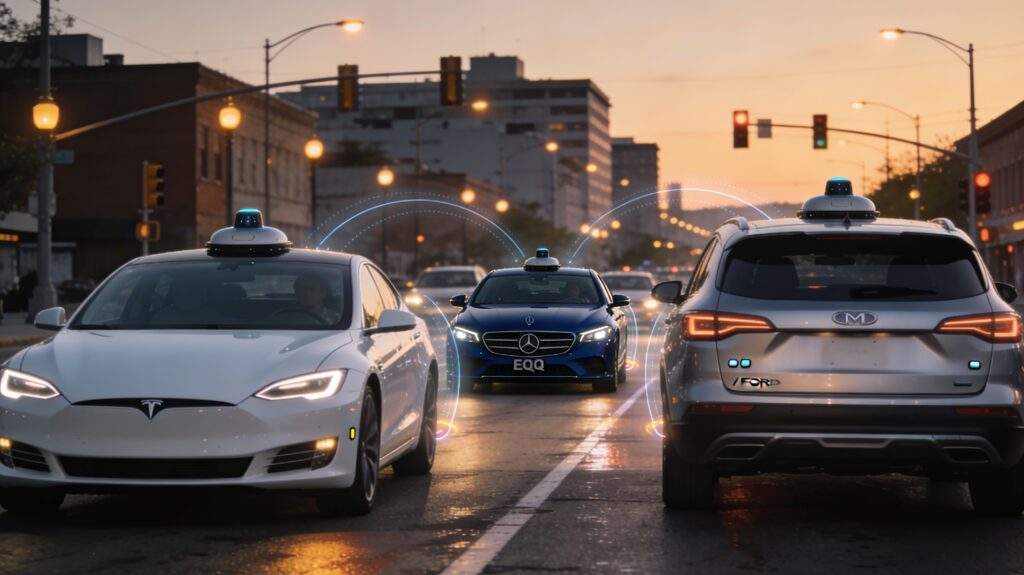
The automotive landscape is electrifying at a breathtaking pace, and by 2026, the choice between an electric vehicle (EV) and a hybrid will be a common dilemma for millions of drivers. Both technologies offer significant advantages over traditional gasoline cars, promising lower running costs, reduced emissions, and often, a more refined driving experience. But which option truly stands out as “better” for most drivers in the mid-2020s?
This comprehensive guide will cut through the jargon and directly compare full electric vehicles, plug-in hybrids, and conventional hybrids across the key factors that matter to everyday drivers. We’ll explore purchase price, running costs, fueling convenience, maintenance, environmental impact, and even delve into specific driver profiles to help you determine which electrified option best suits your lifestyle in 2026.
Understanding the Contenders: EV vs. Hybrid
Before we dive into the comparison, let’s clarify the fundamental differences between the three main types of electrified vehicles you’ll encounter.
Full Electric Vehicles (EVs)
Also known as Battery Electric Vehicles (BEVs), these cars run solely on electricity. They have no gasoline engine, relying entirely on a large battery pack to power an electric motor.
- How they work: You plug them into an external power source (home charger or public station) to replenish the battery. The electric motor provides instant torque and power to the wheels.
- Key characteristics: Zero tailpipe emissions, extremely quiet operation, often rapid acceleration, and a reliance on charging infrastructure.
- Pros: Lowest running costs (per mile), simplest drivetrain, lowest maintenance, best environmental performance (at the tailpipe), often eligible for significant incentives.
- Cons: Higher upfront cost, charging time (though improving), range anxiety (diminishing concern with longer ranges), dependence on charging infrastructure.
Plug-in Hybrid Electric Vehicles (PHEVs)
PHEVs offer the best of both worlds by combining a gasoline engine with a significant electric motor and battery pack, allowing them to operate on pure electricity for a meaningful range (typically 20-50+ miles) before switching to a conventional hybrid mode or gasoline power.
- How they work: You can plug them in to charge the battery, much like an EV. For shorter daily commutes, they can run solely on electricity. For longer trips, the gasoline engine kicks in, either to assist the electric motor or to power the car directly, functioning like a conventional hybrid.
- Key characteristics: Electric-only range for daily driving, gasoline backup for extended travel, external charging capability.
- Pros: Flexibility – electric for daily commutes, gas for long trips; reduced fuel consumption; often smaller incentives than EVs but more than HEVs.
- Cons: More complex drivetrain than an EV or HEV; still requires gasoline; heavier due to carrying both systems; electric range is limited.
Conventional (Mild/Full) Hybrid Electric Vehicles (HEVs)
These are the most common type of hybrid. They combine a gasoline engine with an electric motor and a small battery, but unlike PHEVs, they cannot be plugged in to charge.
- How they work: The electric motor assists the gasoline engine, especially during acceleration and at low speeds, and can power the car for very short distances (usually under a mile) at low speeds. The battery recharges through regenerative braking and the gasoline engine.
- Key characteristics: Improved fuel economy over pure gasoline cars, no external charging required, functions like a regular car at the gas pump.
- Pros: Familiar fueling process; lower upfront cost than PHEVs or EVs; better fuel efficiency than conventional gasoline cars; no range anxiety.
- Cons: Still uses gasoline; no significant pure-electric driving range; less fuel-efficient than PHEVs (when PHEV is charged) or EVs; minimal environmental benefit compared to PHEVs/EVs.
Key Factors for Comparison
Now, let’s break down how these three types of vehicles compare across the most critical decision-making factors for drivers in 2026.
Purchase Price and Incentives
In 2026, the initial cost remains a significant consideration, though the gap is narrowing.
- Electric Vehicles (EVs): Generally have the highest sticker price. However, this is often offset by robust federal tax credits (which may be adjusted in 2026 but are likely to remain), state incentives, and local rebates. These can significantly reduce the effective purchase price, making some EVs competitive with their gasoline counterparts. The total cost of ownership over several years often favors EVs due to lower running costs.
- Plug-in Hybrid Electric Vehicles (PHEVs): Typically sit in the middle, costing more than comparable HEVs but less than many full EVs. They often qualify for smaller federal and state incentives, reflecting their partial reliance on gasoline.
- Conventional Hybrid Electric Vehicles (HEVs): Usually the most affordable electrified option, with prices often comparable to or slightly higher than equivalent gasoline-only models. They rarely qualify for significant federal purchase incentives, though some state or local programs might exist.
Summary: EVs often have the highest initial cost, but incentives can bridge the gap. HEVs are generally the most accessible upfront.
Running Costs: Fueling, Electricity, and Efficiency
This is where electrified vehicles truly shine, offering substantial savings over time.
- Electric Vehicles (EVs): Boast the lowest “fuel” costs per mile. Charging at home, especially during off-peak hours, is significantly cheaper than gasoline. Public DC fast charging is more expensive but still often less than gasoline for the equivalent range. Maintenance costs are also generally lower (see below).
- Plug-in Hybrid Electric Vehicles (PHEVs): Running costs depend heavily on how often you charge and how much you drive on electric power. If your daily commute falls within the electric range and you charge regularly, your gasoline consumption can be minimal. For longer trips, you’ll pay gasoline prices. They offer the best flexibility but require discipline to maximize electric driving.
- Conventional Hybrid Electric Vehicles (HEVs): Offer improved fuel economy over conventional gasoline cars, typically 10-30% better, depending on the model and driving conditions. You still pay gasoline prices, but you’ll visit the pump less frequently.
Summary: EVs offer the lowest per-mile running costs. PHEVs can be almost as cheap if charged diligently. HEVs provide solid fuel savings without the need to plug in.
Charging and Fueling Convenience
This factor heavily influences the “ease of use” for many drivers.
- Electric Vehicles (EVs): Requires adaptation. Home charging (Level 2 is ideal, Level 1 is sufficient for many commuters) is key for convenience. Public charging infrastructure, including DC fast chargers, is expanding rapidly by 2026, making road trips increasingly feasible but still requiring some planning.
- Plug-in Hybrid Electric Vehicles (PHEVs): Offer maximum flexibility. You can charge at home for daily electric driving and simply fill up at any gas station for longer journeys, eliminating range anxiety. This “best of both worlds” approach is a major draw.
- Conventional Hybrid Electric Vehicles (HEVs): The most convenient in terms of fueling. You simply pull into any gas station, fill up, and go, just like a conventional car. No need to worry about charging infrastructure or plug types.
Summary: HEVs offer the most familiar fueling. PHEVs combine home charging with gas station convenience. EVs require a shift in mindset and access to charging.
Maintenance and Reliability
The simplicity of electric powertrains often translates to lower long-term maintenance.
- Electric Vehicles (EVs): Generally have lower maintenance costs. There’s no oil to change, no spark plugs, no fuel filters, no complex exhaust systems, and fewer moving parts in the drivetrain. Regenerative braking also reduces wear on friction brakes, meaning they last longer. The main components are the battery, motor, and power electronics, which are designed for longevity.
- Plug-in Hybrid Electric Vehicles (PHEVs): More complex, incorporating both a gasoline engine and an electric motor/battery system. This means they require both gasoline engine maintenance (oil changes, etc.) and have the hybrid components. However, the gasoline engine may see less use than in a conventional car, potentially extending its life.
- Conventional Hybrid Electric Vehicles (HEVs): Have maintenance needs similar to gasoline cars, including oil changes and engine service, plus the added complexity of the hybrid system. However, the hybrid components are generally very robust and designed to last the life of the vehicle.
Summary: EVs typically have the lowest maintenance costs. PHEVs and HEVs have similar maintenance profiles to gasoline cars, though PHEVs might see less frequent engine service if driven mostly on electric.
Environmental Impact
The primary driving force behind electrification is reducing carbon emissions.
- Electric Vehicles (EVs): Produce zero tailpipe emissions. Their overall environmental footprint depends on how the electricity is generated. As grids increasingly incorporate renewable energy sources, the lifecycle emissions of EVs become significantly lower than any combustion engine vehicle.
- Plug-in Hybrid Electric Vehicles (PHEVs): Produce zero tailpipe emissions when running on electricity. Even when the gasoline engine is active, their combined fuel efficiency means lower overall emissions than a conventional gasoline car. The environmental benefit is directly tied to the percentage of driving done on electric power.
- Conventional Hybrid Electric Vehicles (HEVs): While more fuel-efficient than gasoline cars, they still burn fossil fuels and produce tailpipe emissions. Their environmental benefit is primarily in reducing fuel consumption and thus greenhouse gas emissions compared to non-hybrid gasoline vehicles.
Summary: EVs offer the greatest environmental benefit (zero tailpipe emissions). PHEVs are next, especially if charged regularly. HEVs are better than pure gasoline but lag behind.
Driving Experience and Performance
Beyond the practicalities, how do these cars feel on the road?
- Electric Vehicles (EVs): Known for their instant torque, smooth, silent acceleration, and quiet cabin. The absence of engine noise and vibrations creates a remarkably serene driving experience. Many EVs also have a low center of gravity due to battery placement, leading to good handling.
- Plug-in Hybrid Electric Vehicles (PHEVs): Offer a dual experience. In electric mode, they are quiet and smooth, similar to an EV. When the gasoline engine engages, the transition is often seamless, though you will notice engine noise. Performance can be robust thanks to the combined power of the engine and electric motor.
- Conventional Hybrid Electric Vehicles (HEVs): Provide a smooth and generally quiet ride, especially at low speeds when the electric motor is active. The transition between electric and gasoline power is typically refined. While not known for blistering performance, they offer adequate power for daily driving.
Summary: EVs generally offer the most refined and exhilarating driving experience. PHEVs combine this with the familiar sound and feel of a gasoline engine when needed. HEVs provide a smooth, efficient ride.
Driver Profiles: Which Car Fits You Best?
To make this decision more concrete, let’s look at three common driver profiles in 2026.
The City Commuter: Jane
- Profile: Jane lives in a city apartment, commutes 25 miles round trip daily, mostly in stop-and-go traffic. She has access to public charging at work and occasional street charging, but no dedicated home charger. She prioritizes low running costs and environmental impact.
- HEV: A good option if charging access is truly limited. It will offer better fuel economy than a gasoline car in her stop-and-go commute without any charging hassle.
- PHEV: An excellent choice if she can consistently use her workplace charger or find reliable public L2 charging. Her 25-mile commute would likely be covered entirely on electric power, meaning she’d rarely use gasoline during the week. The gas engine offers peace of mind for weekend trips without charging.
- EV: Possible, but challenging without dedicated home charging. While workplace charging helps, relying solely on public infrastructure for all charging needs can be inconvenient and more expensive. A lower-range, more affordable EV might work if public charging is abundant and reliable in her area.
Recommendation for Jane: A PHEV is likely the best fit. It allows her to maximize electric driving during the week with the flexibility of gasoline for longer trips, without the full commitment to public charging an EV would require.
The Suburban Family: Mark & Lisa
- Profile: Mark and Lisa live in the suburbs with two kids. They drive around 50-70 miles daily for commutes, school runs, and errands. They have a garage with a Level 2 home charger installed. They also take occasional weekend trips of 200-300 miles. They value a balance of convenience, cost savings, and environmental benefits.
- HEV: A solid, economical choice if they prefer simplicity and don’t want to deal with charging at all. It will save them money on gas but won’t offer the zero-emission local driving.
- PHEV: An ideal solution. Their daily driving would be almost entirely electric, charged conveniently overnight at home. For weekend trips, the gasoline engine provides seamless range, eliminating any planning anxiety. It balances all their priorities.
- EV: A very strong contender, especially with a Level 2 home charger. Most EVs by 2026 will offer ranges well over 250 miles, easily covering their daily needs. Weekend trips would require using DC fast chargers, which are becoming more prevalent and reliable. The lower running and maintenance costs would be a significant long-term benefit for the family budget.
Recommendation for Mark & Lisa: Both a PHEV and an EV are excellent options. A PHEV offers ultimate flexibility. An EV, especially one with a good range, offers superior long-term savings and environmental benefits, assuming comfort with public fast charging for longer journeys. For maximum simplicity and peace of mind on longer trips, the PHEV often wins.
The Long-Distance Commuter/Road Tripper: David
- Profile: David commutes 150 miles round trip daily, primarily highway driving. He frequently takes long road trips of 500+ miles. He has home charging but prioritizes uninterrupted travel and minimal stops.
- HEV: A highly practical choice. It offers improved fuel economy over gasoline cars for his long commutes and road trips, with the absolute convenience of quick gas station fill-ups. No need to worry about charging availability or speed.
- PHEV: While it offers some electric range, his 150-mile daily commute would quickly deplete the battery, meaning he’d be running on gasoline for the majority of his drive. The hybrid efficiency would still be better than a pure gasoline car, but the “electric advantage” would be less pronounced. For road trips, it functions like a regular hybrid.
- EV: Requires a high-range EV (300+ miles) and a very robust, reliable DC fast-charging network along his routes. His daily commute would be feasible with home charging, but frequent 500+ mile road trips would still require multiple, planned fast-charging stops, which can add significant time to the journey compared to a 5-minute gas fill-up.
Recommendation for David: A Conventional Hybrid (HEV) or a PHEV (if he values the partial electric commute) remains the most practical choice for his specific needs in 2026. While EVs are improving rapidly, the sheer mileage and need for uninterrupted travel still favor the immediate convenience of gasoline for this profile.
Conclusion: Making the Right Choice in 2026
In 2026, there is no single “best” vehicle type for everyone. The ideal choice between an electric car and a hybrid depends entirely on your specific driving habits, access to charging, budget, and priorities.
- Go Electric (EV) if: You have reliable home charging (ideally Level 2), most of your daily driving is within a typical EV range (200-300 miles), you prioritize the lowest running costs, minimal maintenance, zero tailpipe emissions, and a quiet, powerful driving experience. The upfront cost might be higher, but incentives and long-term savings are compelling.
- Consider a Plug-in Hybrid (PHEV) if: You want the best of both worlds – the ability to drive on electricity for most daily commutes (with home charging) and the peace of mind of a gasoline engine for longer trips without needing to plan charging stops. PHEVs offer incredible flexibility and significantly reduce your gasoline consumption.
- Opt for a Conventional Hybrid (HEV) if: You prioritize a lower initial purchase price, absolute fueling convenience (no charging required), and improved fuel economy over a gasoline car, especially if home charging isn’t an option or you do frequent, very long-distance trips.
The automotive landscape is evolving quickly, and 2026 will see even more advanced and affordable options in both EV and hybrid categories. By carefully considering your personal circumstances against these key factors, you can confidently choose the electrified vehicle that truly is better for you.