EV battery technology is at the core of every electric vehicle (EV), dictating everything from its range and performance to its cost and lifespan. For many prospective EV buyers, the battery can seem like a mysterious black box, a complex piece of engineering that holds the key to their driving experience. It’s also often the single most expensive component of an EV, representing a significant portion of the vehicle’s overall price. Understanding the fundamentals of this technology isn’t just for engineers; it’s crucial for making an informed decision before you “go electric.”
This article will demystify EV battery technology, breaking down its essential components, explaining how it impacts your daily driving, and addressing common concerns about longevity, cost, and environmental footprint. By the end, you’ll have a clear understanding of what to look for and what questions to ask, empowering you to choose an EV that perfectly suits your needs and lifestyle.
How EV Battery Technology Works in Simple Terms
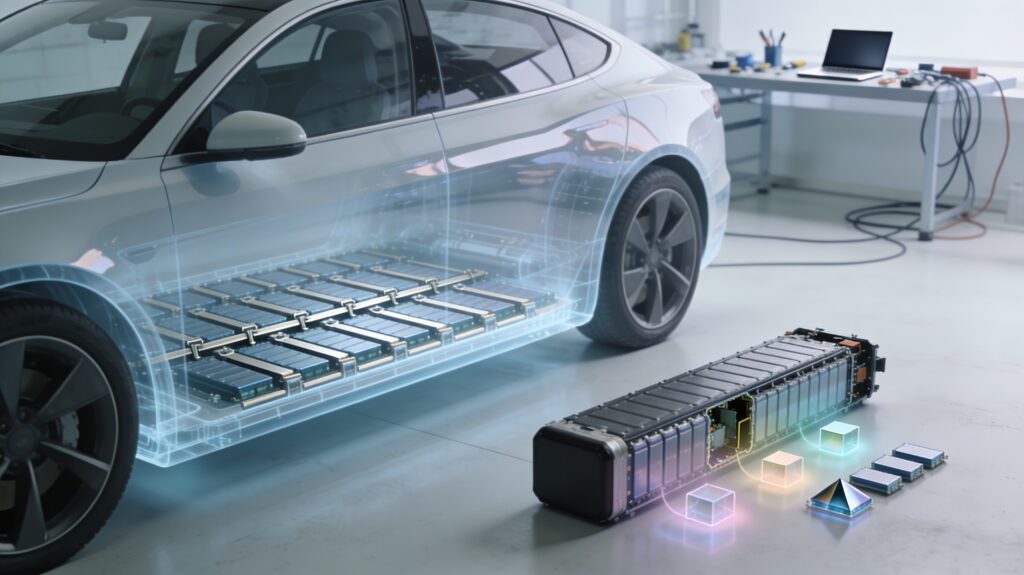
At its heart, EV battery technology relies on a sophisticated system designed to store and deliver electrical energy efficiently and safely. While the chemistry can get complex, the basic structure and function are understandable. Think of an EV battery not as a single unit, but as a collection of interconnected components working in harmony.
The fundamental building blocks are cells. These are individual energy storage units, similar in concept to the AA batteries you might use at home, but much more powerful and designed for repeated charging and discharging. Most modern EVs use lithium-ion cells due to their high energy density (meaning they can store a lot of energy in a small space) and relatively long cycle life. Each cell contains an anode, a cathode, a separator, and an electrolyte, which allows lithium ions to move between the anode and cathode, creating an electric current.
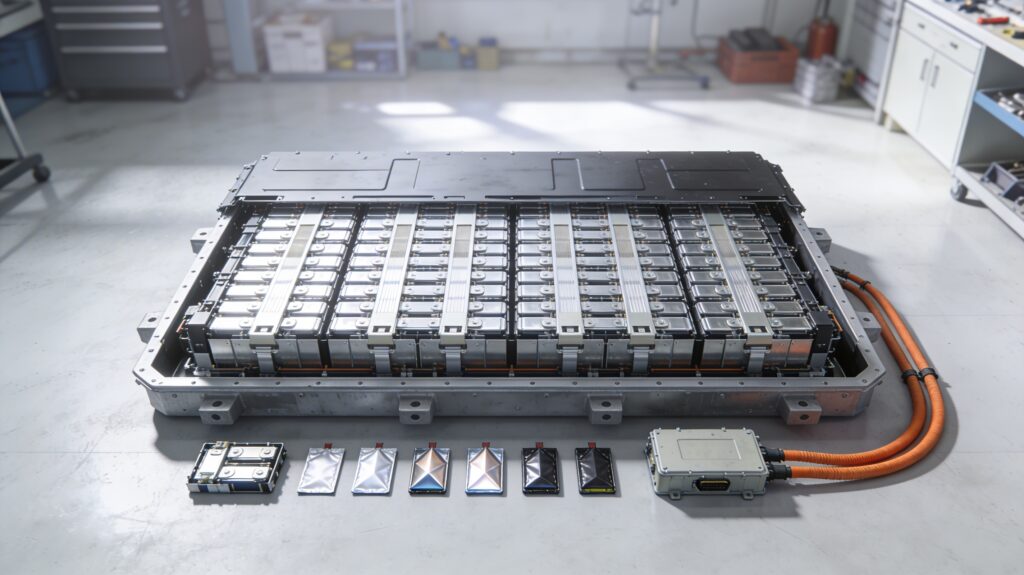
To achieve the power and capacity needed for a vehicle, thousands of these individual cells are grouped together into larger units called modules. These modules provide structural integrity, protect the cells, and often include preliminary voltage and temperature monitoring. By arranging cells in series, the voltage of the module increases, and by arranging them in parallel, the current capacity increases.
Multiple modules are then assembled into a complete battery pack. This pack is the large, flat structure typically located in the floor of an EV. The battery pack isn’t just a collection of modules; it’s a highly engineered system that includes robust thermal management systems (to keep the battery at its optimal operating temperature), sophisticated wiring, and a comprehensive safety enclosure. This enclosure protects the battery from physical damage and helps contain any potential thermal events.
Crucially, every EV battery pack is managed by a Battery Management System (BMS). This is the “brain” of the battery, a sophisticated electronic controller that continuously monitors every cell’s voltage, current, and temperature. The BMS is vital for several reasons:
- Safety: It prevents overcharging, over-discharging, and overheating, all of which can damage the battery or pose safety risks.
- Performance: It optimizes power delivery and regeneration, ensuring the battery operates within its safe and efficient parameters.
- Longevity: By balancing the charge across all cells and preventing extreme conditions, the BMS helps extend the battery’s overall lifespan.
- Information: It communicates critical data about the battery’s state of charge (SoC), health, and temperature to the vehicle’s main computer and, ultimately, to the driver.
In essence, the cells store the energy, the modules organize them, the pack houses and protects them, and the BMS intelligently manages their operation. This layered approach ensures that the powerful energies stored within the battery can be harnessed safely and effectively to power your electric vehicle.
How Battery Capacity, Range, and Charging Are Related
Understanding the relationship between battery capacity, the range you can expect, and how you charge your EV is fundamental to daily electric vehicle ownership. These three factors are deeply intertwined and directly impact your convenience and driving experience.
Battery Capacity (kWh)
Battery capacity is measured in kilowatt-hours (kWh) and represents the total amount of energy the battery can store. Think of it like the size of a fuel tank in a gasoline car – a larger tank holds more fuel. A 60 kWh battery, for example, can store 60 kilowatt-hours of electrical energy. Generally, a higher kWh rating means more stored energy and, consequently, a longer potential driving range.
However, a larger battery doesn’t always translate linearly to a proportionately longer range. The efficiency of the vehicle itself plays a huge role. A smaller, lighter EV might achieve a similar range with a smaller battery compared to a larger, heavier SUV, simply because it requires less energy to move.
Range Estimates and Real-World Factors
The “range” of an EV is the estimated distance it can travel on a single full charge. Official range figures (like EPA ratings in the US or WLTP in Europe) are determined under standardized test conditions. These figures provide a useful baseline for comparison between different vehicles.
However, real-world range can vary significantly from these estimates due to several factors:
- Driving Style: Aggressive acceleration, high speeds, and frequent braking consume more energy. Driving smoothly and at moderate speeds maximizes range.
- Temperature: Both extremely cold and hot weather can reduce range. Cold temperatures reduce battery efficiency and require energy for cabin heating, while hot temperatures might require more energy for cooling the battery and cabin.
- Terrain: Driving uphill requires more energy, while driving downhill allows for regenerative braking, which can recover some energy.
- Accessory Use: Using the air conditioning, heater, infotainment system, or heated seats all draw power from the battery, reducing available range.
- Vehicle Load: Carrying heavy passengers or cargo increases the energy required to move the vehicle.
- Tire Pressure: Under-inflated tires increase rolling resistance and reduce efficiency.
It’s common for drivers to experience slightly less range than the official rating, especially in adverse conditions or with a lead foot. Many EVs provide real-time range estimates that account for current driving conditions and habits, giving drivers a more accurate picture.
AC vs. DC Charging and Charging Curves
Charging an EV involves converting electricity from the grid into a form the battery can store. There are two primary types of charging:
- AC (Alternating Current) Charging: This is typically what you’ll find at home (Level 1 and Level 2) and many public charging stations. The AC power from the grid is converted to DC (Direct Current) by the EV’s onboard charger before it enters the battery.
- Level 1 (120V AC): Uses a standard household outlet. It’s very slow (adds 2-5 miles of range per hour) but convenient for overnight trickle charging.
- Level 2 (240V AC): Requires a dedicated circuit (like an electric dryer or oven outlet) and a charging station (EVSE). It’s much faster (adds 20-30+ miles of range per hour), making it suitable for daily charging at home or workplace.
- DC (Direct Current) Fast Charging (DCFC): Often called “fast charging” or “rapid charging,” this uses specialized high-power charging stations found along highways or in public areas. Here, the AC-to-DC conversion happens before the power reaches the vehicle, allowing for much higher power delivery directly to the battery. DCFC can add hundreds of miles of range in 20-60 minutes, depending on the charger’s power output (e.g., 50 kW, 150 kW, 350 kW) and the vehicle’s charging capability.
Charging Curves are a crucial concept for understanding DC fast charging. An EV doesn’t charge at a constant rate from 0% to 100%. Instead, the charging speed typically starts high when the battery is low (e.g., 10-20% SoC), then gradually tapers off as the battery approaches full (e.g., 80% SoC and beyond). This is because charging a lithium-ion battery rapidly when it’s nearly full can cause stress and heat, potentially damaging the cells and reducing their lifespan. The BMS carefully manages this to protect the battery.
Therefore, while a 350 kW charger might be advertised, your car might only sustain that peak power for a short window, and it will significantly slow down after 50-80% SoC. For this reason, EV drivers often “top off” to 80% at fast chargers, as the remaining 20% takes disproportionately longer. Understanding this curve helps manage expectations for road trips and quick charging stops.
In summary, a larger battery capacity generally means more range, but real-world conditions significantly influence that range. Home AC charging is convenient for daily use, while public DC fast charging is for quicker top-ups, keeping in mind the variable charging speeds dictated by the battery’s state of charge.
How EV Battery Technology Ages Over Time
Like any rechargeable battery, the advanced EV battery technology powering electric vehicles will degrade over time. This phenomenon, known as battery degradation, means that the total amount of energy the battery can store and the power it can deliver will gradually decrease with age and use. Understanding this process and what to realistically expect is key for long-term EV ownership.
What is Degradation?
Battery degradation is a natural chemical process. With each charge and discharge cycle, small, irreversible changes occur within the battery cells. These changes can include:
- Loss of active lithium: Some lithium ions become trapped or form unwanted compounds, reducing the amount available to carry current.
- Formation of Solid Electrolyte Interphase (SEI): A layer forms on the electrodes, which is essential for battery function but can grow thicker over time, impeding ion flow.
- Electrode cracking or deformation: Physical changes to the electrodes can reduce their capacity to store and release lithium ions.
The result is a gradual reduction in the battery’s overall capacity, meaning a full charge will provide slightly less range than it did when the battery was new. This isn’t a sudden drop but a slow, continuous decline.
Cycle Life and Calendar Life
Battery degradation is influenced by two main factors:
- Cycle Life: This refers to the number of full charge-discharge cycles a battery can undergo before its capacity drops below a certain threshold (e.g., 80% of its original capacity). A “cycle” is typically defined as discharging the battery from 100% to 0% and then recharging it back to 100%. Partial charges and discharges count proportionally towards a full cycle. For instance, discharging from 100% to 50% and recharging to 100% would be half a cycle. Modern EV batteries are designed for thousands of cycles, often equivalent to hundreds of thousands of miles of driving.
- Calendar Life: This refers to the battery’s age, regardless of how much it’s been used. Even if an EV sits unused, its battery will still degrade slowly due to natural chemical processes that occur over months and years. Heat is a significant accelerator of calendar aging.
What to Realistically Expect Over Years
While degradation is inevitable, modern EV batteries are remarkably robust. Most manufacturers design their batteries to retain a significant percentage of their original capacity for many years and miles.
- Initial Drop: There’s often a slightly faster initial drop in capacity during the first year or two, followed by a slower, more linear decline.
- Warranty Thresholds: Most EV battery warranties guarantee that the battery will retain at least 70% or 75% of its original capacity for 8 years or 100,000 miles (sometimes more). This indicates that manufacturers expect the battery to perform well within this range for a substantial period.
- Long-Term Performance: Real-world data from older EVs (like early Nissan Leafs or Teslas) shows that many batteries hold up very well, often exceeding 80% capacity after five to ten years of ownership. While some early models had issues, contemporary battery tech has improved significantly. For example, some studies suggest average degradation of only 1-2% per year.
Factors That Speed Up or Slow Down Degradation
While some degradation is unavoidable, certain behaviors and environmental conditions can accelerate or mitigate it:
Factors that speed up degradation:
- Extreme Temperatures: Operating or storing the battery in very hot climates (especially above 30°C/86°F) or very cold climates (below 0°C/32°F) for prolonged periods can accelerate degradation. The BMS manages this with thermal systems, but sustained extremes are still detrimental.
- Frequent DC Fast Charging: While convenient, consistently relying on DC fast charging, especially to 100%, can put more stress on the battery compared to slower AC charging. This is due to the higher currents and heat generated.
- Consistent Charging to 100% and Discharging to 0%: Keeping a battery at very high or very low states of charge for extended periods is not ideal. Most manufacturers recommend charging to 80-90% for daily use and only to 100% when needed for a long trip. Similarly, avoid letting the battery regularly drop below 10-20%.
- Aggressive Driving: Constantly demanding maximum power from the battery (e.g., frequent hard acceleration) can generate more heat and stress.
Factors that slow down degradation:
- Moderate Temperatures: Operating and storing the battery in temperate climates is ideal.
- Regular AC Charging: Using Level 1 or Level 2 AC charging for daily top-ups is gentler on the battery.
- “Sweet Spot” Charging: Keeping the battery’s state of charge between 20% and 80% for most daily driving is often recommended by manufacturers for optimal longevity.
- Gentle Driving: Smooth acceleration and braking reduce stress on the battery.
- Thermal Management System (TMS): A sophisticated, active liquid-cooled TMS (common in most modern EVs) is highly effective at maintaining the battery’s optimal operating temperature, significantly mitigating temperature-related degradation.
In conclusion, while EV batteries do age, modern EV battery technology is designed for impressive longevity. With sensible charging habits and awareness of environmental factors, most EV owners can expect their battery to perform reliably for well over a decade, providing ample range for their driving needs.
How EV Battery Technology Affects Cost and Resale Value
The advanced EV battery technology is undeniably the most expensive component of an electric vehicle, and its cost directly influences the initial purchase price and, subsequently, the vehicle’s long-term resale value. Understanding this financial aspect is crucial for prospective buyers.
Portion of Car Cost is the Battery
Historically, the battery pack has accounted for anywhere from 30% to 50% of an EV’s manufacturing cost. While battery prices per kWh have been steadily declining over the past decade due to economies of scale, technological advancements, and increased production, they still represent a substantial investment. For example, a 60 kWh battery pack, even at today’s lower prices (which might be around $100-$150 per kWh at the pack level for manufacturers), could easily add $6,000 to $9,000 to the vehicle’s production cost. This cost is then passed on to the consumer, along with other manufacturing and development expenses.
The battery’s capacity (kWh) is a major determinant of its cost. Larger batteries, offering longer range, naturally cost more. This is why entry-level EVs with smaller batteries are generally more affordable than premium long-range models. As battery technology continues to evolve and production scales further, these costs are expected to decrease, making EVs more competitive with internal combustion engine (ICE) vehicles.
Warranties and Expected Lifespan
One of the biggest concerns for potential EV buyers is the longevity and potential replacement cost of the battery. Fortunately, manufacturers provide robust warranties to mitigate this risk.
- Standard Warranty: In the United States, federal regulations (Magnuson-Moss Warranty Act) require EV batteries to be warranted for at least 8 years or 100,000 miles, guaranteeing a minimum capacity retention (typically 70% or 75%). Many manufacturers offer even longer warranties in specific regions or for certain models.
- What it Covers: These warranties cover defects in materials or workmanship, and significant capacity degradation below the specified percentage. If your battery’s capacity drops below, say, 70% within the warranty period, the manufacturer is obligated to repair or replace it at no cost to you.
- Expected Lifespan: Real-world data and manufacturer projections suggest that most EV batteries will significantly outlast their warranty period. Many are expected to last 10-15 years or 150,000-200,000 miles, often retaining well over 80% of their original capacity. The sophisticated Battery Management System (BMS) and advanced thermal management systems play a crucial role in extending this lifespan beyond what was once thought possible for rechargeable batteries.
It’s important to differentiate between an individual cell failure (which might be reparable by replacing a module) and a complete battery pack replacement, which is far less common outside of accident damage.
Resale Implications
The battery’s health and the warranty status significantly impact an EV’s resale value.
- Positive Impact of Healthy Battery: An EV with a well-maintained battery and substantial remaining warranty coverage will fetch a higher resale price. Buyers are more confident in a vehicle where the most expensive component is still performing optimally and protected by the manufacturer.
- Impact of Degradation: While minor degradation is expected and generally accepted, an EV with significantly degraded battery capacity (e.g., below 70% and out of warranty) will likely see a reduced resale value. The perceived risk of future replacement or diminished range will deter some buyers.
- Transparency: Some manufacturers or third-party services offer battery health reports, which can be valuable for both buyers and sellers in the used EV market. These reports provide an objective measure of the battery’s current state of health (SoH).
- Market Acceptance: As the used EV market matures and battery longevity proves reliable, consumer confidence in second-hand EVs is growing. The initial fear of “battery replacement shock” is diminishing as more data becomes available, and the cost of replacement (if ever needed) is expected to decrease over time.
- Future Value: The ongoing advancements in battery technology mean newer EVs will likely have even better longevity and performance. This isn’t necessarily a negative for current models but highlights the rapid pace of innovation.
In summary, while the battery is a major cost driver for an EV, comprehensive warranties protect your investment for a significant period. A healthy battery with remaining warranty coverage will positively influence an EV’s resale value, making it a more attractive option in the used market.
How EV Battery Technology Relates to Sourcing and Sustainability
The widespread adoption of electric vehicles, while crucial for decarbonizing transportation, has brought the environmental and ethical implications of EV battery technology into sharp focus. The materials required for these batteries raise important questions about sourcing, mining practices, and the overall sustainability of the supply chain.
Key Materials and Associated Concerns
Modern lithium-ion batteries rely on several key raw materials, each with its own set of sourcing challenges:
- Lithium: The “lithium” in lithium-ion batteries. It’s relatively abundant globally, but its extraction methods vary.
- Hard Rock Mining: Traditional mining in Australia, which is energy-intensive.
- Brine Extraction: Pumping brine from underground reservoirs in the “lithium triangle” (Chile, Argentina, Bolivia). This method uses significant amounts of water, raising concerns about local water scarcity and ecosystem impact in arid regions.
- Cobalt: A critical component for stability and energy density in many battery chemistries.
- Ethical Concerns: Over 70% of the world’s cobalt comes from the Democratic Republic of Congo (DRC), where it is often associated with artisanal mining, child labor, and unsafe working conditions. This has led to significant scrutiny and efforts by manufacturers to secure more ethical supply chains.
- Nickel: Used to increase energy density and power output.
- Environmental Concerns: Mining nickel, particularly from laterite deposits, can be energy-intensive and produce significant waste. Indonesia is a major source.
- Graphite: Used for the anode. While synthetic graphite is common, natural graphite mining can also have environmental impacts.
- Manganese: Another element used to enhance battery stability and performance.
These materials are not only mined but also processed, transported, and manufactured into battery components, each step adding to the overall environmental footprint and potential social impact.
Efforts Toward Alternative Chemistries and Improved Sourcing
The industry is acutely aware of these challenges and is actively pursuing multiple strategies to improve the sustainability and ethics of EV battery technology:
- Reduced Reliance on Problematic Materials:
- Lower Cobalt Chemistries: A major trend is the development of battery chemistries that use less cobalt, or even none at all.
- NMC (Nickel Manganese Cobalt): Moving from NMC 111 (equal parts nickel, manganese, cobalt) to NMC 532, 622, and now 811 (8 parts nickel, 1 part manganese, 1 part cobalt) significantly reduces cobalt content.
- LFP (Lithium Iron Phosphate): These batteries contain no nickel or cobalt. While historically having lower energy density (meaning less range for the same weight/volume), advancements in LFP technology (e.g., cell-to-pack designs) have made them increasingly viable for mainstream EVs, particularly for standard range models. Many manufacturers, including Tesla and Ford, are increasingly adopting LFP batteries.
- Solid-State Batteries: A future technology promising even higher energy density and potentially safer operation, which could also enable different material compositions.
- Lower Cobalt Chemistries: A major trend is the development of battery chemistries that use less cobalt, or even none at all.
- Responsible Sourcing and Due Diligence:
- Supply Chain Traceability: Automakers and battery manufacturers are investing heavily in technologies and audits to trace materials from mine to factory, ensuring they come from ethically responsible sources. Blockchain technology is being explored to enhance transparency.
- Certifications: Industry initiatives and third-party certifications aim to verify responsible mining practices.
- Direct Contracts: Some companies are forging direct relationships with mining operations that adhere to strict environmental and labor standards, bypassing intermediaries.
- Localizing Manufacturing: Building battery gigafactories closer to EV assembly plants reduces transportation emissions and fosters regional economic development, while potentially simplifying oversight of the supply chain.
- Sustainable Mining Practices: Research and development are ongoing to find less impactful ways to extract materials, such as direct lithium extraction (DLE) from brines that promises to be more efficient and environmentally friendly.
While the journey towards fully sustainable and ethical EV battery production is ongoing, the industry’s commitment to addressing these challenges is clear. The focus on alternative chemistries, improved sourcing, and greater transparency aims to ensure that the environmental benefits of electric vehicles are not offset by unsustainable practices in their production.
How Recycling and Second-Life Uses Work for EV Batteries
As the world transitions to electric vehicles, the question of what happens to EV batteries at the end of their useful life is becoming increasingly important. Instead of simply being discarded, EV battery technology is being developed with “circularity” in mind, meaning batteries are designed for either second-life applications or recycling to recover valuable materials.
Second-Life Uses (Reuse)
Before a battery is considered for recycling, it’s often evaluated for “second-life” applications. An EV battery is typically deemed “end-of-life” for automotive use when its capacity drops below 70-80% of its original state. While this might not be sufficient for optimal vehicle range, it’s still perfectly adequate for less demanding applications.
Common second-life uses include:
- Stationary Energy Storage: This is the most prominent second-life application. Degraded EV battery packs or modules can be repurposed to store energy from renewable sources like solar panels or wind turbines, or to provide grid stability services. For example, a battery might store solar energy during the day to be used at night, reducing reliance on fossil fuel peaker plants. Companies are already deploying large-scale stationary storage units built from repurposed EV batteries.
- Backup Power: Providing backup power for homes, businesses, or data centers during outages.
- Off-Grid Power: Supplying electricity to remote locations not connected to the main grid.
The advantages of second-life applications are significant:
- Extends Value: It maximizes the economic value of the battery, delaying the need for recycling.
- Environmental Benefit: It reduces the demand for new battery manufacturing, saving resources and energy.
- Cost-Effective: Repurposed batteries can provide energy storage at a lower cost than brand-new units.
However, challenges exist, such as the cost of disassembling, testing, and reconfiguring battery packs, as well as standardization issues across different EV models.
Recycling Approaches
When a battery is no longer suitable for second-life use, or if it’s damaged beyond repair, it enters the recycling stream. The goal of EV battery recycling is to recover valuable raw materials, reducing the need for new mining and minimizing waste.
There are two primary approaches to battery recycling:
- Pyrometallurgy (Smelting):
- Process: This involves grinding the battery cells and then melting them down at very high temperatures. The intense heat separates the metals.
- Recovery: Primarily recovers metals like nickel, cobalt, and copper in an alloy form. Lithium and aluminum are often lost in the slag (waste product) or are more difficult to recover efficiently.
- Current State: This is a more established method, often leveraging existing metal recycling infrastructure.
- Disadvantage: It’s energy-intensive and less efficient at recovering all valuable materials, especially lithium.
- Hydrometallurgy (Chemical Leaching):
- Process: This involves shredding the battery cells and then using chemical solvents (acids) to dissolve the metals. The dissolved metals are then separated and precipitated out as pure compounds.
- Recovery: Can recover a wider range of materials, including lithium, nickel, cobalt, and manganese, often in higher purity.
- Current State: This method is gaining traction and is considered more environmentally friendly and efficient than pyrometallurgy for recovering specific elements.
- Advantage: Higher recovery rates for valuable materials, less energy-intensive than smelting, and produces fewer emissions.
Clarifying Current State vs. Future Goals
- Current State: While EV battery recycling is technically feasible, the economic viability and scale are still developing. The relatively small number of “end-of-life” EV batteries currently available (due to their long lifespan) means that large-scale, dedicated recycling infrastructure is still emerging. Many batteries are still being stored or processed in smaller batches.
- Future Goals: The industry’s goal is a closed-loop system where a significant percentage of battery materials are recovered and reused in new battery production. Governments and manufacturers are investing heavily in research and development to improve recycling efficiency, reduce costs, and scale up operations. New recycling technologies, including direct recycling (where cathode materials are directly rejuvenated without breaking down into constituent elements), are also being explored, promising even greater efficiency and lower energy consumption.
The shift towards a circular economy for EV batteries is a critical component of the overall sustainability of electric transportation. By maximizing the lifespan through second-life applications and efficiently recovering materials through advanced recycling, the environmental footprint of EV battery technology can be significantly reduced, ensuring that the benefits of electrification are realized across the entire lifecycle of the vehicle.
Conclusion: How to Use EV Battery Technology Knowledge When Buying
Embarking on the journey to purchase an electric vehicle is an exciting prospect, and armed with a foundational understanding of EV battery technology, you are now far better equipped to make an informed and confident decision. The battery, as we’ve explored, is the heart of your EV, influencing everything from performance and range to long-term cost and environmental impact.
We’ve demystified how these complex systems operate, from the individual cells to the intelligent Battery Management System. You now understand that capacity (kWh) directly impacts range, but that real-world factors like driving style and temperature play a significant role. The nuances of AC versus DC charging, and the concept of charging curves, should help you plan your daily charging and road trips more effectively. We’ve also addressed the crucial topic of battery degradation, reassuring you that modern EV batteries are designed for impressive longevity, backed by robust warranties, and that sensible charging habits can further extend their life. Finally, we’ve touched upon the ethical and environmental considerations of battery sourcing and the promising future of recycling and second-life applications, highlighting the industry’s commitment to sustainability.
As you step into the showroom or browse online listings, here is a short checklist to help you apply your newfound knowledge:
Buyer’s Checklist for EV Battery Technology:
- Capacity (kWh) vs. Your Needs:
- Question: How many kWh does the battery offer, and how does that translate to estimated range?
- Consideration: Match the battery capacity to your typical driving needs. Do you commute short distances daily, or do you frequently undertake long road trips? For most urban/suburban drivers, a 40-60 kWh battery might be sufficient, while frequent long-distance travelers might prefer 70 kWh or more. Don’t overpay for range you don’t need.
- Battery Warranty:
- Question: What is the manufacturer’s warranty for the battery (years/miles and minimum capacity retention)?
- Consideration: A strong warranty (e.g., 8 years/100,000 miles, 70-75% capacity retention) provides peace of mind regarding the battery’s longevity and potential replacement costs.
- Battery Chemistry (LFP vs. NMC/NCA):
- Question: What type of chemistry does the battery use (e.g., Lithium Iron Phosphate (LFP) or Nickel Manganese Cobalt (NMC)/Nickel Cobalt Aluminum (NCA))?
- Consideration: LFP batteries are often cheaper, more stable, and can be charged to 100% daily without significant degradation, though they traditionally have lower energy density. NMC/NCA batteries offer higher energy density (more range for weight) but are generally recommended to be charged to 80-90% for daily use. Understand the implications for your charging habits.
- Charging Network and Capability:
- Question: What are the vehicle’s maximum AC and DC fast charging rates, and what charging standards does it use (CCS, NACS, etc.)?
- Consideration: Ensure the vehicle’s charging speed aligns with your needs, especially for road trips. Research the availability of compatible charging stations in your area and along your frequently traveled routes.
- Thermal Management System (TMS):
- Question: Does the EV have an active liquid-cooled thermal management system for its battery?
- Consideration: An active liquid-cooled TMS is crucial for battery longevity, especially in extreme climates or with frequent fast charging. It helps maintain the battery’s optimal operating temperature, significantly slowing degradation.
- Expected Usage Pattern:
- Question: How do your typical driving and charging habits align with battery care recommendations?
- Consideration: Plan to avoid consistently charging to 100% or letting the battery drain to near 0%. Embrace the “charge to 80% for daily use” recommendation to maximize battery lifespan.
By asking these questions and considering these factors, you’ll move beyond the hype and make a truly informed decision, selecting an electric vehicle whose battery technology perfectly aligns with your expectations, lifestyle, and long-term ownership goals. The future of driving is electric, and with this knowledge, you’re ready to embrace it confidently.