Digital twins are rapidly evolving from a niche concept into a foundational technology across numerous industries. While the term “digital twin” is becoming increasingly common in business and technology discussions, its precise meaning and practical applications are often misunderstood. Are they merely advanced simulations, or something fundamentally different? How do these sophisticated digital replicas truly impact the physical world, and what potential do they hold for the future?
This article aims to demystify digital twins, explaining their core principles and showcasing their transformative power through concrete examples in three distinct yet interconnected domains: the automotive industry, manufacturing factories, and large-scale urban environments. By exploring their definition, mechanics, and real-world impact, we will provide a clear framework for understanding how these dynamic digital counterparts are reshaping design, operations, and strategic planning.
How to Define Digital Twins vs Simple Simulations
At its most fundamental level, a digital twin is a virtual representation of a physical object, system, or process. However, to truly understand digital twins, it’s crucial to differentiate them from traditional simulations or static 3D models. The key distinction lies in their continuous, real-time, or near-real-time connection to their physical counterpart.
Imagine a complex piece of machinery on a factory floor. A traditional simulation might model how this machine should behave under certain conditions, based on theoretical parameters. It’s a predictive tool, but it lacks dynamic feedback from the actual physical machine once it’s operational. A digital twin, on the other hand, is constantly fed data from sensors embedded in the physical machine – data on temperature, pressure, vibration, output, energy consumption, and more. This continuous stream of information updates the digital model, ensuring it accurately reflects the physical machine’s current state, performance, and even its degradation over time.
This real-time data flow is what makes digital twins so powerful. It allows the digital replica to evolve synchronously with its physical twin. Changes in the physical system – a component wearing out, a setting being adjusted, or an environmental factor shifting – are immediately reflected in the digital model. This creates a living, breathing digital counterpart that can be used for far more than just predicting future behavior; it can be used to understand current performance, diagnose issues as they emerge, and even prescribe interventions.
The data fueling a digital twin comes from various sources, including the Internet of Things (IoT) sensors, enterprise resource planning (ERP) systems, manufacturing execution systems (MES), and even external data like weather patterns or market demand. This continuous data synthesis creates a comprehensive, up-to-date picture of the physical asset. It’s not just about replicating geometry; it’s about replicating behavior, performance, and context. This rich, dynamic dataset allows businesses to gain unprecedented insights, enabling proactive decision-making rather than reactive problem-solving. It moves beyond “what if” scenarios to “what is” and “what will likely be” based on current realities.
How Digital Twins Work in Cars and Vehicles
The automotive industry is a prime example of where digital twins are making a significant impact, transforming everything from vehicle design and testing to ongoing maintenance and fleet management. A vehicle digital twin is a comprehensive digital model of a specific car, truck, or even an entire fleet, incorporating its design specifications, operational data, and environmental context.
Vehicle Design and Prototyping
In the design phase, digital twins allow engineers to create virtual prototypes that behave exactly like their physical counterparts would. Instead of building expensive physical prototypes for every design iteration, engineers can test aerodynamics, crash safety, thermal performance, and even software integrations within the digital realm. This accelerates the design cycle, reduces costs, and allows for more innovative solutions to be explored. For instance, a digital twin of a new car model can be subjected to virtual crash tests under various conditions, enabling designers to optimize safety features long before any metal is cut.
Predictive Maintenance and Performance Optimization
Once a vehicle is in operation, its digital twin truly comes to life. Sensors embedded throughout the car — monitoring engine performance, tire pressure, brake wear, battery health, and countless other parameters — continuously feed data to its digital counterpart. This allows for real-time monitoring of the vehicle’s health and performance.
Consider a fleet of commercial trucks. Each truck can have its own digital twin. By analyzing the data from these digital twins, fleet managers can:
- Predict Failures: Algorithms can detect subtle changes in performance data that indicate an impending component failure, such as unusual vibrations in the drivetrain or abnormal temperature fluctuations in the engine. This enables proactive maintenance scheduling, replacing parts before they fail, preventing costly breakdowns, and minimizing downtime.
- Optimize Fuel Efficiency: By analyzing driving patterns, engine load, and environmental factors through the digital twin, recommendations can be made to drivers or adjustments can be made to vehicle settings to improve fuel economy.
- Enhance Safety: Real-time data can alert drivers or fleet managers to critical issues, such as dangerously low tire pressure or brake system anomalies, potentially preventing accidents.
- Inform Future Design: The aggregated operational data from thousands of vehicle digital twins provides invaluable feedback to manufacturers, informing future design improvements and engineering decisions for new models. For example, if data consistently shows a specific component wearing out faster than expected, engineers can redesign it for greater durability in the next generation.
Luxury car manufacturers are already leveraging digital twins to offer personalized services. A car’s digital twin can monitor its owner’s driving habits and preferences, suggest optimal service intervals, or even pre-order replacement parts based on predicted wear, ensuring a seamless ownership experience. For autonomous vehicles, digital twins are even more critical, acting as a virtual testing ground for AI algorithms and a real-time monitor for ensuring safe operation in complex environments.
How Digital Twins Work in Factories and Industrial Systems
The application of digital twins in manufacturing, often referred to as “industrial digital twins,” is revolutionizing production lines, enabling unprecedented levels of efficiency, flexibility, and predictive capability. These digital replicas extend beyond individual machines to encompass entire production lines, complex processes, and even whole factory layouts.
Optimizing Production Lines and Machine Performance
In a factory setting, every machine, robot, and conveyor belt can have its own digital twin. These individual twins are then integrated into a larger digital twin representing the entire production line or even the whole factory. Data streams from sensors on each component, including factors like motor speed, temperature, vibration, energy consumption, and material flow, are continuously fed into these digital models.
This real-time insight allows manufacturers to:
- Optimize Throughput: By simulating different operational parameters and observing their impact on the digital twin, managers can identify bottlenecks, adjust machine speeds, and reconfigure workflows to maximize output without disrupting physical production. For instance, a digital twin can run thousands of scenarios to find the optimal balance between machine utilization and product flow, leading to increased production rates.
- Predictive Maintenance: Similar to vehicles, digital twins of industrial machines can predict component failures. For example, a digital twin of a robotic arm might detect subtle changes in motor current or joint vibration patterns that indicate an impending malfunction. This allows maintenance teams to schedule repairs during planned downtime, preventing unexpected breakdowns that can halt an entire production line, saving millions in lost production.
- Quality Control: By correlating machine performance data with product quality metrics, digital twins can identify deviations that lead to defects. If a specific machine’s temperature fluctuates outside an optimal range, its digital twin can flag this, potentially preventing an entire batch of products from being produced out of specification.
- Energy Management: Factories consume vast amounts of energy. Digital twins can monitor energy usage across all machines and processes in real-time, identifying areas of inefficiency and suggesting adjustments to reduce consumption, contributing to sustainability goals and cost savings.
Testing Changes Before Implementation
One of the most significant advantages of digital twins in manufacturing is the ability to test changes in a virtual environment before implementing them physically. This capability is invaluable for:
- Process Improvement: Want to introduce a new material, re-sequence an assembly step, or integrate a new piece of equipment? Instead of halting production or risking costly errors on the factory floor, these changes can be simulated within the digital twin. Engineers can observe the impact on throughput, quality, and machine wear, refining the changes until optimal outcomes are achieved, all without affecting live production.
- New Product Introduction: When launching a new product, its manufacturing process can be entirely simulated within a factory’s digital twin. This helps identify potential manufacturing challenges, optimize tooling, and validate assembly sequences long before physical production begins, significantly accelerating time-to-market.
- Workforce Training: Operators and technicians can be trained on the digital twin of a machine or production line. They can learn to operate complex equipment, troubleshoot issues, and respond to various scenarios in a safe, risk-free virtual environment, improving their readiness for the physical plant.
For example, a major automotive assembly plant could use a digital twin of its entire body shop. If they plan to introduce a new car model with a different chassis design, they can simulate how existing robotic welders and material handling systems would need to be reprogrammed or reconfigured. They can identify collision risks between robots, optimize movement paths, and ensure seamless integration, making the physical transition much smoother and faster. This powerful capability ensures that improvements are data-driven, de-risked, and precisely executed.
How Digital Twins Work at the Scale of Cities and Infrastructure
Expanding beyond individual assets and factories, digital twins are now being deployed at an unprecedented scale: to model entire cities and their complex infrastructure. These “city digital twins” are dynamic virtual replicas that integrate data from countless sources to provide a holistic, real-time view of urban environments.
Modeling Urban Systems
A city-scale digital twin is an aggregation of smaller digital twins, including individual buildings, transportation networks, utility grids, and public services. It pulls data from a vast array of sensors, smart devices, municipal systems, and even social media feeds. This data can include:
- Traffic Flow: Real-time data from traffic cameras, GPS devices in vehicles, and public transport systems.
- Utility Networks: Information on water pressure, electricity consumption, gas leaks, and waste management from smart meters and sensors.
- Environmental Factors: Air quality, temperature, noise levels, and weather data from environmental sensors.
- Building Performance: Energy consumption, occupancy levels, structural integrity data from smart buildings.
- Public Services: Data on emergency response times, waste collection routes, and public safety incidents.
This massive influx of data creates a constantly updated, living model of the city, reflecting its current state and how its various systems interact.
Potential Uses for Planning, Resilience, and Emergency Response
The applications for city digital twins are incredibly diverse and impactful, offering city planners and administrators powerful tools for better governance and improved quality of life for residents.
- Urban Planning and Development: City digital twins allow planners to visualize and simulate the impact of new construction projects, zoning changes, or infrastructure upgrades before they are implemented. For example, a proposed new high-rise building can be added to the digital twin to assess its impact on sunlight access for surrounding buildings, wind patterns, traffic congestion, and utility loads. This enables data-driven decisions that lead to more sustainable and livable urban spaces.
- Enhancing Resilience: Cities face numerous challenges, from natural disasters to infrastructure failures. A digital twin can be used to model the impact of various scenarios. For instance, simulating a major flood can show which areas would be most affected, how evacuation routes would be compromised, and where critical infrastructure might fail. This allows cities to develop more robust disaster preparedness plans and design resilient infrastructure.
- Optimizing Resource Management: By monitoring energy consumption, water usage, and waste generation in real-time, city digital twins can identify inefficiencies and suggest optimizations. This could involve dynamically adjusting traffic light timings to reduce congestion and emissions, optimizing waste collection routes, or managing energy distribution more efficiently to prevent blackouts during peak demand.
- Emergency Response: In the event of an emergency – a fire, a major accident, or a public health crisis – a city digital twin can provide emergency services with real-time situational awareness. It can show the location of the incident, available resources, optimal routes for emergency vehicles (considering current traffic), and even predict how the situation might evolve. This can significantly improve response times and coordination, potentially saving lives.
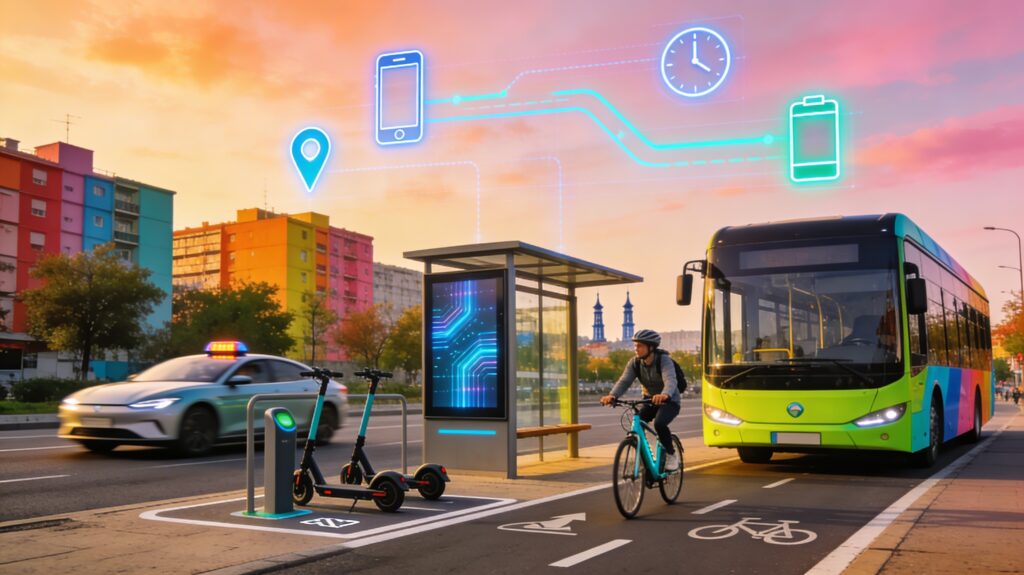
- Smart Mobility: Beyond traffic management, digital twins can facilitate the integration of various transportation modes, from public transit and ride-sharing to autonomous vehicles and micromobility solutions. They can help optimize routes, manage parking, and plan for future mobility needs based on real-time demand and infrastructure capacity.
The city of Singapore, for example, has developed a comprehensive digital twin called “Virtual Singapore” to plan urban development, test policy changes, and manage emergencies. This allows them to simulate the effects of population growth, climate change, and new infrastructure projects in a highly detailed virtual environment, informing more effective and sustainable urban management strategies. The potential for these large-scale digital twins to create smarter, more efficient, and more resilient cities is immense.
How to Think About Benefits and Drawbacks of Digital Twins
While the transformative potential of digital twins is undeniable, a balanced perspective requires understanding both their significant advantages and the inherent challenges associated with their implementation and ongoing management.
Benefits of Digital Twins
The primary benefits of implementing digital twins revolve around enhanced decision-making, operational efficiency, and risk reduction:
- Better Planning and Design: Digital twins allow for extensive virtual prototyping and simulation, significantly reducing the need for costly physical iterations. This accelerates design cycles, lowers development costs, and enables engineers to explore more innovative solutions with greater confidence. In urban planning, it means visualizing the impact of a new development before breaking ground.
- Reduced Downtime and Increased Uptime: Through continuous monitoring and predictive analytics, digital twins can forecast equipment failures and maintenance needs. This shifts maintenance from reactive (fixing after a breakdown) to proactive and predictive (scheduling maintenance before a failure occurs), minimizing unexpected downtime and maximizing operational uptime for critical assets in cars, factories, and infrastructure.
- Safer Experimentation and Risk Mitigation: The ability to test changes in a virtual environment eliminates the risks associated with altering physical systems. New processes, software updates, or operational adjustments can be rigorously tested on the digital twin without affecting live production, compromising safety, or incurring significant costs from errors. This is particularly crucial in high-stakes environments like industrial plants or critical urban infrastructure.
- Optimized Performance and Efficiency: By providing real-time insights into performance, resource consumption, and environmental factors, digital twins enable continuous optimization. Whether it’s fine-tuning a car’s engine for fuel efficiency, adjusting a factory’s production line for maximum throughput, or managing a city’s energy grid, digital twins provide the data-driven intelligence needed for peak performance.
- Extended Asset Lifespan: By enabling precise, timely maintenance and preventing catastrophic failures, digital twins can help extend the operational lifespan of expensive assets, from industrial machinery to vehicles and infrastructure components.
- Enhanced Collaboration and Communication: Digital twins provide a common, dynamic, and intuitive platform for stakeholders – engineers, operators, managers, city planners – to visualize, understand, and collaborate on complex systems.
Drawbacks of Digital Twins
Despite their powerful advantages, adopting digital twins is not without its challenges:
- Complexity of Implementation: Building a comprehensive digital twin, especially for large-scale systems like a factory or a city, is an incredibly complex undertaking. It requires integrating data from disparate sources, developing sophisticated models, and ensuring seamless connectivity. The initial setup can be daunting and resource-intensive.
- Data Quality and Volume Issues: The accuracy and utility of a digital twin are entirely dependent on the quality and quantity of the data it receives. Poorly calibrated sensors, incomplete data streams, or inaccurate historical data can lead to a “garbage in, garbage out” scenario, rendering the digital twin unreliable. Managing the sheer volume of data generated by thousands of sensors also presents significant challenges in storage, processing, and analysis.
- Significant Cost: The initial investment in hardware (sensors, IoT devices), software (modeling platforms, data analytics tools), and specialized personnel (data scientists, engineers) can be substantial. While the long-term ROI can be high, the upfront cost can be a barrier for many organizations.
- Interoperability Challenges: Integrating digital twins across different systems, vendors, and older legacy infrastructure can be difficult. Ensuring that data flows seamlessly and consistently between various platforms often requires custom solutions and significant integration efforts.
- Security and Privacy Concerns: Because digital twins rely on vast amounts of real-time data, often including sensitive operational or even personal information (especially in city-scale applications), cybersecurity becomes paramount. Protecting these data streams from breaches, ensuring data integrity, and adhering to privacy regulations (like GDPR) are critical and complex challenges.
- Talent Gap: Implementing and managing sophisticated digital twins requires a highly skilled workforce with expertise in areas like IoT, data science, AI, cloud computing, and domain-specific engineering. There is often a shortage of professionals with this multidisciplinary skill set.
- Over-reliance and Misinterpretation: If not properly understood and managed, there’s a risk of over-relying on the digital twin’s predictions without considering real-world variables or misinterpreting the insights it provides, leading to poor decisions.
Navigating these drawbacks requires careful planning, a phased implementation strategy, and a clear understanding of the specific problems digital twins are intended to solve.
How to Start Exploring Digital Twins in Your Industry
The prospect of implementing digital twins can seem overwhelming, especially given their complexity and potential cost. However, a strategic, phased approach can make the journey manageable and yield tangible results. For businesses and organizations looking to leverage this technology, here are practical steps to begin exploring digital twins in your specific industry:
1. Identify a High-Value System or Process
Don’t try to twin your entire operation from day one. Start small with a clearly defined scope. Look for a system, machine, or process that:
- Is Critical: A failure or inefficiency in this system would have a significant negative impact on your operations, revenue, or safety.
- Is Data-Rich (or Could Be): It already generates some data, or it’s feasible to equip it with sensors to collect relevant data.
- Has Clear Pain Points: There are obvious problems you’re trying to solve, such as frequent downtime, high maintenance costs, quality issues, or inefficient resource usage.
- Has Measurable Outcomes: You can clearly define what success looks like (e.g., “reduce downtime by X%,” “improve throughput by Y%”).
For example, in a factory, this might be a single bottleneck machine or a specific assembly line causing frequent issues. In transportation, it could be a critical vehicle in a fleet or a specific intersection experiencing heavy congestion.
2. Map Existing Data Sources and Identify Gaps
Once you’ve chosen your target system, conduct a thorough audit of all available data. This includes:
- Sensor Data: What sensors are already present? What data do they collect (temperature, pressure, vibration, speed, flow rates, GPS)?
- Operational Data: Data from SCADA systems, MES, ERP, CMMS (Computerized Maintenance Management Systems) – historical performance, maintenance logs, production schedules, work orders.
- Environmental Data: If relevant, external data like weather, traffic patterns, or market demand.
Identify where your data is stored, its format, and its quality. Crucially, pinpoint the gaps. What data do you need that you don’t currently collect? This will inform your sensor deployment strategy. Don’t underestimate the challenge of data integration; disparate systems often use different protocols and formats.
3. Start with a Limited-Scope Digital Twin
Begin with a simplified digital twin focused on addressing your identified high-value problem.
- Proof of Concept: Develop a basic model that uses available data to replicate a specific aspect of the physical system’s behavior. For instance, if your goal is predictive maintenance for a pump, start by modeling its vibration and temperature profiles against historical failure data.
- Pilot Project: Implement this limited twin on your chosen system. Focus on demonstrating a clear return on investment (ROI) for this specific application. This could be reducing unplanned downtime, optimizing a single parameter, or identifying a particular inefficiency.
- Leverage Existing Technologies: Explore off-the-shelf digital twin platforms or cloud services (like AWS IoT TwinMaker, Azure Digital Twins, Google Cloud IoT) that can accelerate your initial efforts without requiring massive custom development.
The goal here isn’t perfection, but rather practical demonstration and learning.
4. Iterate and Expand Based on Success
Once your initial pilot yields positive results and demonstrates value, you can begin to expand:
- Add More Data Sources: Integrate additional sensors or data streams to enrich the digital twin’s understanding of the physical system.
- Increase Model Sophistication: Incorporate more complex physics-based models, AI/ML algorithms for deeper insights, or more advanced visualization tools.
- Expand Scope: Extend the digital twin to cover more components of the system, integrate with other systems, or replicate more processes. For example, if you successfully twinned one machine, expand to an entire production line. If you twinned one car, expand to a small fleet.
- Refine and Optimize: Continuously collect feedback from users, monitor the digital twin’s accuracy, and make adjustments to improve its performance and utility.
5. Encourage Realistic Expectations
Digital twins are powerful tools, but they are not magic. It’s crucial to manage expectations within your organization:
- They require ongoing effort: Digital twins are living entities that need continuous data feeds, model updates, and maintenance.
- ROI takes time: While initial pilots can show quick wins, the full transformative benefits will accrue over time with continued investment and expansion.
- They augment, not replace, human intelligence: Digital twins provide insights and recommendations; human experts are still needed to interpret findings, make strategic decisions, and intervene where necessary.
- Data is king: Emphasize the importance of data quality and governance from the outset.
By following these steps, organizations can systematically explore and adopt digital twins, unlocking their immense potential to drive innovation, efficiency, and resilience across various industries.
How Digital Twins Fit into the Bigger Tech Picture
Digital twins are not an isolated technological fad; they are a sophisticated convergence point for several other groundbreaking technologies that have been developing over the past decade. Understanding this broader context helps to solidify their place as a cornerstone of the next industrial revolution.
At their core, digital twins are the ultimate expression of the Internet of Things (IoT). Without the proliferation of smart sensors and connected devices, the continuous data streams necessary to update a digital twin simply wouldn’t exist. IoT provides the nervous system – the eyes, ears, and touch – that allows the physical world to communicate with its digital counterpart. From temperature probes in a car engine to vibration sensors on a factory robot or air quality monitors in a smart city, IoT devices are the essential conduits feeding real-time data into the digital twin.
Building upon this data foundation, Artificial Intelligence (AI) and Machine Learning (ML) algorithms are the brains of the operation. Raw sensor data alone is just noise; AI and ML transform this noise into actionable intelligence. They enable the digital twin to:
- Identify patterns: Detect subtle anomalies that indicate impending failures (predictive maintenance).
- Predict outcomes: Forecast future performance based on current conditions and historical data.
- Optimize processes: Recommend adjustments to improve efficiency, reduce energy consumption, or enhance quality.
- Automate decision-making: In some cases, AI can even trigger automated responses in the physical system based on the digital twin’s analysis.
This intelligent analysis is what elevates a digital twin beyond a mere model to a truly insightful and proactive tool.
Finally, the immense computational power and storage required to manage, process, and analyze the vast amounts of data generated by digital twins are provided by Cloud Computing. The cloud offers scalable infrastructure, allowing organizations to build and operate digital twins without massive on-premise hardware investments. It facilitates real-time data ingestion, parallel processing of complex simulations, and secure storage of historical data. Furthermore, cloud platforms often provide ready-made services for IoT connectivity, data analytics, and AI/ML, significantly lowering the barrier to entry for developing and deploying digital twin solutions. The distributed nature of the cloud also enables global access and collaboration on digital twins, crucial for multinational corporations or geographically dispersed infrastructure.
In essence, digital twins act as the intelligent interface between the physical and digital worlds, powered by IoT for data acquisition, AI/ML for intelligence, and cloud computing for scalable infrastructure. They are not just a tool for replication; they are a platform for understanding, predicting, and optimizing complex systems in real-time. As these foundational technologies continue to advance, the capabilities and pervasiveness of digital twins will only grow, further blurring the lines between the virtual and physical, and unlocking unprecedented levels of efficiency and innovation across every sector.