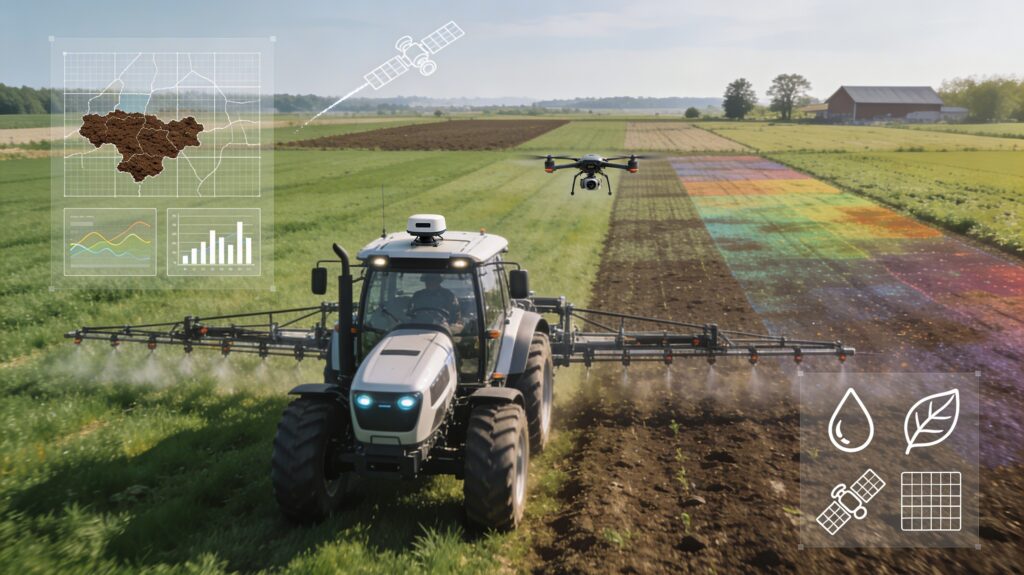
Precision agriculture stands at the forefront of a profound transformation in how we produce food, fiber, and fuel. It’s a revolutionary approach that leverages cutting-edge data and technology to make farming practices not just more efficient, but also significantly more resilient in the face of environmental and economic challenges. Gone are the days of treating every acre of a field identically; instead, precision agriculture empowers farmers to understand and manage their land with unprecedented detail, applying the right inputs, in the right amounts, at the right time, and in the right place. This paradigm shift promises to optimize resource use, boost yields, reduce environmental impact, and enhance overall farm profitability.
This article will delve into the fundamental concepts of precision agriculture, demystifying how it works and illuminating why it matters to everyone from the individual farmer to global policymakers and the tech innovators shaping our future. We’ll explore the tools and techniques that define this exciting field, examine its practical implications for daily farm operations, consider its varied impact across different farm sizes, and discuss its critical role in building a sustainable and food-secure world.
How to Define Precision Agriculture in Simple Terms
At its core, precision agriculture can be defined as a farm management strategy that employs information technology to ensure that crops and soil receive precisely what they need for optimum health and productivity. Rather than applying a uniform treatment across an entire field, this approach recognizes and responds to variability within the field. Think of it as personalized medicine for your farm, where each plant or area gets tailored care based on its specific requirements.
This tailored approach is made possible by a continuous flow of data. Sensors collect information about everything from soil nutrient levels and moisture content to crop health and local weather patterns. This raw data is then processed and analyzed, often using advanced analytics and artificial intelligence, to generate actionable insights. These insights guide farmers in making highly specific decisions about where and when to plant, how much water to apply, the exact quantity of fertilizer or pesticide needed, and even the optimal time for harvest. The ultimate goal is to maximize efficiency, minimize waste, and improve economic and environmental sustainability. It’s about working smarter, not just harder, by using data to make every farming decision more informed and impactful.
How Sensors, Drones, and Satellites Power Precision Agriculture
The backbone of precision agriculture is its ability to gather, process, and act upon vast amounts of spatial and temporal data. This data collection is primarily powered by an array of sophisticated technologies, each playing a critical role in providing a comprehensive picture of the farm environment.
Field Sensors: The Eyes and Ears on the Ground
Field sensors are the frontline data collectors, providing real-time, localized information directly from the soil and immediate environment.
- Soil Moisture Sensors: These devices are strategically placed throughout a field to measure the water content in the soil at various depths. By understanding exactly where and when water is needed, farmers can optimize irrigation schedules, preventing both under-watering (which reduces yield) and over-watering (which wastes water and can leach nutrients).
- Soil Nutrient Sensors: Advanced sensors can analyze the levels of essential nutrients like nitrogen, phosphorus, and potassium in the soil. This data allows for variable-rate application of fertilizers, meaning nutrients are applied only where they are deficient, rather than broadcasting them across the entire field. This saves money, reduces nutrient runoff into waterways, and improves soil health.
- Weather Stations: Miniature weather stations deployed on farms provide hyper-local data on temperature, humidity, rainfall, wind speed, and solar radiation. This information is crucial for predicting disease outbreaks, optimizing spray timings, and making informed decisions about planting and harvesting windows.
- pH Sensors: Measuring soil pH is vital as it affects nutrient availability. Sensors provide precise data, enabling targeted lime or sulfur applications to adjust pH levels as needed, ensuring optimal growing conditions.
Drones: The Low-Altitude Eye in the Sky
Agricultural drones, or Unmanned Aerial Vehicles (UAVs), offer a flexible and high-resolution perspective of fields. Equipped with various cameras and sensors, drones can capture detailed imagery that reveals insights invisible to the naked eye.
- Crop Health Monitoring: Drones fitted with multispectral or hyperspectral cameras can detect subtle changes in plant health long before they become visible. By measuring how plants reflect different wavelengths of light, these cameras can identify areas stressed by pests, diseases, nutrient deficiencies, or water shortages. This allows for early intervention, targeting specific problem areas rather than treating an entire field.
- Stand Count and Yield Estimation: Drones can quickly and accurately count plants, helping farmers assess germination rates and predict potential yields. This information is valuable for replanting decisions or adjusting harvest plans.
- Topography Mapping: Drones can create detailed 3D maps of fields, identifying variations in elevation that might affect water flow or soil erosion, guiding land leveling or drainage projects.
- Targeted Spraying: Some advanced drones are equipped to carry small payloads of pesticides or fertilizers, allowing for highly precise, variable-rate spraying that targets specific weeds or disease patches, dramatically reducing chemical use.
Satellite Imagery: The Broad View from Orbit
Satellites provide a broader, more consistent, and often more cost-effective way to monitor large agricultural areas over time.
- Large-Scale Crop Monitoring: Satellites can image vast regions, providing valuable data for monitoring crop growth, identifying regional trends, and assessing damage from large-scale weather events like droughts or floods.
- Historical Data Analysis: The long history of satellite data allows farmers and researchers to track changes in land use, crop performance, and environmental conditions over decades, providing crucial context for current decisions and future planning.
- Vegetation Indices: Satellites use various spectral bands to calculate vegetation indices, such as the Normalized Difference Vegetation Index (NDVI), which indicates plant vigor and biomass. These indices help farmers identify variations in crop health across large fields and prioritize scouting efforts.
- Weather Forecasting and Climate Modeling: Satellite data is integral to regional weather forecasting and climate modeling, offering a macro perspective that complements local sensor data for comprehensive risk assessment and long-term planning.
The data from these diverse technologies is often integrated into a central farm management information system (FMIS). This system processes the raw data, applies analytical algorithms, and generates maps, reports, and recommendations that farmers can use to make precise, data-driven decisions. For example, satellite imagery might identify a large area of stressed crops, drones could then provide high-resolution details of the specific problem within that area, and field sensors would confirm the underlying soil moisture or nutrient deficiency, leading to a highly targeted intervention. This interconnected network of data collection and analysis is what truly empowers precision agriculture.
How Precision Agriculture Changes Daily Decisions on the Farm
Precision agriculture fundamentally transforms the day-to-day operational decisions on a farm, moving away from broad, generalized practices to highly specific, site-adjusted interventions. This shift allows farmers to optimize inputs, improve efficiency, and respond proactively to dynamic field conditions.
Planting: The Foundation of the Season
Historically, planting involved setting a uniform seed rate across an entire field. With precision agriculture:
- Variable-Rate Seeding: Farmers use soil maps, historical yield data, and satellite imagery to identify zones within a field that have different productivity potentials. High-potential zones might receive a higher seed rate to maximize yield, while lower-potential zones might receive fewer seeds to avoid wasted investment in areas unlikely to produce well. This optimizes seed use and ensures each plant has the best chance to thrive.
- Optimal Timing: Real-time weather data from local sensors, combined with soil moisture and temperature readings, helps farmers determine the ideal window for planting, ensuring seeds germinate effectively and get a strong start.
Irrigation: Water Where and When It’s Needed
Traditional irrigation often involves applying a fixed amount of water to an entire field, regardless of actual need. Precision agriculture revolutionizes this:
- Zone-Specific Watering: Soil moisture sensors strategically placed in different parts of a field provide continuous data. This allows for variable-rate irrigation systems (like pivot irrigators with individually controlled nozzles or drip systems with zoned valves) to apply water only to areas that are dry, and only in the precise amounts required.
- Preventing Over- and Under-Watering: By understanding the specific water demands of different soil types and crop stages within a field, farmers prevent both water waste from over-irrigation and yield loss from under-irrigation, which is critical in water-scarce regions.
Fertilizer and Pesticide Use: Targeted Treatments
One of the most significant impacts of precision agriculture is in the application of agrochemicals, moving from blanket applications to targeted treatments:
- Variable-Rate Fertilization: Soil nutrient maps, derived from sensor data and lab tests, identify specific areas that are deficient in certain nutrients. Precision spreaders then apply fertilizer only to these zones, in the exact quantities needed. This reduces overall fertilizer usage, lowers costs, and minimizes nutrient runoff into rivers and lakes.
- Spot Spraying for Weeds and Pests: Drones or ground-based sensors equipped with cameras and AI can identify specific weed patches or areas of pest infestation. Instead of spraying the entire field, only these targeted spots receive pesticide applications. This drastically reduces chemical usage, protects beneficial insects, and lowers environmental impact. For example, instead of treating the whole field the same, we might treat one zone with more nitrogen, another with less, and a specific corner with a targeted herbicide application for a localized weed problem.
Harvest Timing: Maximizing Quality and Yield
Even harvest decisions become more precise with smart farming tools:
- Yield Mapping: GPS-enabled combines can create real-time yield maps as they harvest, showing precisely how much grain or produce is gathered from every square meter of a field. This data helps farmers understand performance variability and plan future management strategies.
- Optimized Timing: Data on crop maturity (e.g., moisture content in grains, ripeness in fruits) gathered by sensors, combined with weather forecasts, helps farmers choose the optimal harvest window. This ensures maximum yield and quality, reducing spoilage and maximizing market value.
In essence, precision agriculture empowers farmers to move from a “one-size-fits-all” approach to a “right input, right amount, right place, right time” philosophy. This granular control over farm operations leads to more efficient resource use, reduced environmental footprint, and ultimately, a more profitable and sustainable agricultural enterprise.
How Precision Agriculture Helps Large vs Small Farms
The benefits and challenges of adopting precision agriculture technologies vary significantly depending on the scale and resources of a farm. While often associated with large, capital-intensive operations, smart farming also offers unique opportunities and poses specific hurdles for smallholders and cooperatives.
Large, Capital-Intensive Farms: Maximizing Efficiency and Scale
For large farms, often spanning hundreds or thousands of acres, precision agriculture offers substantial advantages, primarily in maximizing efficiency and optimizing resource allocation across vast areas.
- Economies of Scale: The high initial investment in GPS-guided machinery, advanced sensors, and sophisticated software can be more easily justified and amortized over a larger land base. The cost per acre for these technologies tends to decrease as the farm size increases.
- Optimized Operations: Large farms benefit immensely from variable-rate technology for seeding, fertilizing, and spraying, leading to significant savings on inputs (fuel, seeds, fertilizers, pesticides). Automation reduces labor costs and increases the speed and accuracy of operations.
- Data Management: Large farms often have dedicated staff or consultants to manage and interpret the vast amounts of data generated by precision tools, transforming raw information into actionable strategies for improving profitability and sustainability.
- Risk Mitigation: The ability to monitor large areas efficiently helps in early detection of issues like pest outbreaks or water stress, allowing for rapid, targeted responses that prevent widespread crop damage.
However, even large farms face challenges:
- High Initial Costs: While amortized, the upfront capital expenditure for integrated systems can still be substantial.
- Technical Expertise: Operating and maintaining complex precision agriculture systems requires a skilled workforce, which might necessitate training or hiring specialized personnel.
- Integration Complexity: Integrating various hardware and software components from different manufacturers can be a complex task, leading to compatibility issues.
Smallholders and Cooperatives: Opportunities and Challenges
For small farms, which make up the vast majority of agricultural holdings globally, the adoption of precision agriculture presents a different landscape of opportunities and challenges.
- Opportunities for Smallholders:
- Resource Optimization: Even on a smaller scale, precision tools can help smallholders make the most of limited land and resources. Targeted irrigation and fertilization can significantly reduce input costs, which is crucial for their often-tight margins.
- Improved Yield and Quality: By addressing specific needs of their crops, smallholders can achieve higher and more consistent yields, improving food security and market access.
- Market Access: Adopting sustainable practices facilitated by precision agriculture can open doors to premium markets or certification schemes that value environmentally responsible production.
- Simplified Tools: The emergence of more affordable, user-friendly precision tools (e.g., smartphone-based scouting apps, smaller drones, open-source software) is making these technologies more accessible.
- Cooperative Models: Smallholders can pool resources to invest in shared precision agriculture equipment or services (e.g., drone spraying services, shared soil testing labs, collective data analysis platforms). This significantly reduces individual financial burdens and allows access to technologies that would otherwise be out of reach.
- Challenges for Smallholders:
- High Upfront Costs: The absolute cost of advanced machinery and software can be prohibitive for individual small farmers with limited capital.
- Lack of Technical Knowledge: Many smallholders may lack the digital literacy or technical skills required to operate and interpret data from precision agriculture systems.
- Access to Infrastructure: Reliable internet connectivity and access to electricity, essential for many precision tools, can be lacking in remote rural areas.
- Data Overload and Trust: The sheer volume of data can be overwhelming, and smallholders may be wary of data privacy concerns or the perceived complexity of the technology.
- Scalability Issues: Some high-tech solutions designed for large fields may not be practical or cost-effective for very small, irregularly shaped plots.
In summary, while large farms leverage precision agriculture for massive efficiency gains, small farms can find similar benefits in resource optimization and improved yields, especially when adopting simpler, more affordable tools or participating in cooperative schemes. The key for smallholders lies in finding context-appropriate solutions and embracing collaborative models to overcome financial and technical barriers, ensuring that the benefits of smart farming are not exclusive to large-scale operations.
How to Think About Costs and ROI of Precision Agriculture
Investing in precision agriculture is a strategic decision that involves significant upfront costs but promises substantial returns on investment (ROI) over time. Understanding both sides of this equation is crucial for any farmer considering adoption.
Typical Costs of Precision Agriculture
The costs associated with precision agriculture can be categorized into hardware, software, and human capital.
- Hardware: This is often the most visible and expensive component.
- GPS-enabled equipment: Autosteer systems for tractors, GPS-enabled planters, sprayers, and combines can range from a few thousand dollars for basic guidance systems to tens of thousands for fully integrated auto-steer and variable-rate controllers.
- Sensors: Soil moisture sensors, nutrient sensors, field weather stations, and crop health sensors vary widely in price, from hundreds to thousands of dollars per unit, depending on sophistication and network requirements.
- Drones: Agricultural drones with multispectral cameras can cost anywhere from a few thousand dollars for prosumer models to tens of thousands for professional-grade systems with advanced spraying capabilities.
- Connectivity: Investing in robust internet infrastructure (e.g., cellular boosters, satellite internet) for data transfer can also be a significant cost, especially in remote areas.
- Software:
- Farm Management Information Systems (FMIS): These platforms integrate and analyze data from various sources, offering mapping, record-keeping, and decision-support tools. Subscription fees can range from hundreds to thousands of dollars annually, depending on features and farm size.
- Specialized Software: Tools for irrigation scheduling, yield analysis, or pest prediction might come with additional costs.
- Data Processing and Analytics Services: Some farmers outsource data analysis to third-party providers, incurring service fees.
- Training and Expertise:
- Farmer Training: Learning to operate new equipment, interpret data, and utilize software effectively requires time and often formal training, which can involve fees.
- Technical Support: Ongoing technical support for hardware and software is often a recurring cost.
- Consultancy: Hiring precision agriculture consultants to help with initial setup, data interpretation, and strategy development can be a valuable but costly investment.
Potential Gains and Returns on Investment (ROI)
The ROI of precision agriculture is realized through a combination of increased revenue (higher yields, better quality) and reduced costs (optimized inputs, lower risks).
- Increased Yields: By addressing spatial variability and providing optimal conditions for crops, precision agriculture can lead to yield increases of 5-15% or more in some cases. This is achieved through better planting, more precise fertilization, and effective pest/disease management.
- Reduced Input Costs: This is often the most direct and measurable gain.
- Fertilizer Savings: Variable-rate application can reduce fertilizer use by 10-30% by applying it only where needed.
- Pesticide/Herbicide Savings: Spot spraying can cut chemical use by 20-50% or even more, targeting only affected areas.
- Water Savings: Precision irrigation can reduce water consumption by 15-30%, a critical factor in regions facing water scarcity.
- Fuel Savings: Autosteer and optimized field paths reduce overlap and passes, saving fuel and wear on machinery.
- Lower Risk and Improved Resilience:
- Early Problem Detection: Rapid identification of stress, pests, or diseases allows for timely intervention, preventing widespread losses.
- Adaptation to Climate Variability: Precision tools help farmers respond more effectively to unpredictable weather patterns, such as droughts or heavy rainfall, by optimizing irrigation or drainage.
- Environmental Compliance: Reduced chemical and water use helps meet regulatory requirements and enhances the farm’s environmental stewardship.
- Enhanced Decision-Making: Data-driven insights provide a clearer understanding of field performance, allowing for more informed long-term planning, better crop rotation strategies, and optimized land use.
- Improved Product Quality: Consistent growing conditions facilitated by precision agriculture can lead to higher quality produce, potentially fetching better prices in the market.
Context-Dependent ROI
It’s crucial to emphasize that the ROI of precision agriculture depends heavily on context:
- Farm Size and Type: As discussed, large farms may see faster ROI due to economies of scale, while small farms might need to focus on specific, lower-cost solutions or cooperative models.
- Crop Type: High-value crops with intensive management needs (e.g., specialty vegetables, fruits) often show quicker returns than staple crops with lower margins.
- Initial Field Variability: Fields with significant variability in soil type, fertility, or topography stand to gain more from precision management than highly uniform fields.
- Existing Practices: Farms starting from very basic management practices may see more dramatic improvements than those already operating efficiently.
- Market Conditions: Commodity prices and input costs fluctuate, impacting the profitability calculations.
- Government Subsidies/Incentives: Support programs for sustainable farming or technology adoption can significantly improve ROI.
Farmers must conduct a thorough cost-benefit analysis tailored to their specific operation, considering their unique challenges, goals, and resources. Often, a phased approach, starting with one or two key precision technologies, allows farmers to learn, adapt, and demonstrate ROI before making larger investments in a fully integrated system.
How Precision Agriculture Interacts with Climate Risk and Sustainability
Precision agriculture is not merely about increasing efficiency and profit; it is also a powerful suite of tools for addressing some of the most pressing environmental challenges facing humanity, particularly climate change and the need for sustainable resource management. Its data-driven approach allows for practices that significantly reduce agriculture’s ecological footprint and enhance its resilience.
Reducing Waste, Emissions, and Water Use
One of the most direct contributions of precision agriculture to sustainability is its ability to minimize the wasteful use of critical resources.
- Reduced Fertilizer Use and Greenhouse Gas Emissions: Nitrogen fertilizers, while essential for crop growth, are a significant source of nitrous oxide (N2O), a potent greenhouse gas. By applying fertilizers precisely where and when they are needed, precision agriculture reduces overall nitrogen application rates. This not only saves costs but also lowers N2O emissions, contributing directly to climate change mitigation. Furthermore, reduced fertilizer runoff prevents eutrophication of waterways, protecting aquatic ecosystems.
- Optimized Pesticide and Herbicide Application: Targeted spraying, guided by drone imagery or ground sensors, means chemicals are applied only to problem areas, not broadcast across entire fields. This drastically reduces the total volume of pesticides and herbicides used, minimizing their environmental impact on non-target species, soil health, and water quality. It also reduces the energy required for manufacturing and transporting these chemicals.
- Efficient Water Management: Precision irrigation systems, informed by real-time soil moisture data and weather forecasts, deliver water precisely when and where crops need it. This eliminates wasteful over-watering and ensures that every drop contributes to crop growth, conserving precious freshwater resources, especially in drought-prone regions. Reduced irrigation also means less energy consumption for pumping water.
- Improved Soil Health: By optimizing nutrient application and minimizing chemical overuse, precision agriculture helps maintain and improve soil health. Healthy soils are more resilient, better at sequestering carbon, and more capable of supporting robust plant growth with fewer external inputs. Variable-rate tillage or no-till practices, often guided by precision mapping, further reduce soil erosion and enhance carbon sequestration.
- Reduced Fuel Consumption: GPS-guided machinery minimizes overlap during field operations, reducing the number of passes required and thus cutting down on fuel consumption and associated carbon emissions.
Role in Adapting to Climate Variability
Climate change is making weather patterns more extreme and unpredictable, posing significant risks to agricultural production. Precision agriculture provides farmers with critical tools to adapt to this variability and build more resilient farming systems.
- Drought Management: Real-time soil moisture monitoring and precision irrigation allow farmers to manage water resources more effectively during dry spells, ensuring crops receive just enough water to survive and produce, even with reduced overall availability.
- Flood Mitigation: Detailed topographical maps generated by drones can identify areas prone to waterlogging, allowing farmers to implement targeted drainage solutions or select flood-tolerant crop varieties for those specific zones.
- Pest and Disease Monitoring: Warmer temperatures and altered rainfall patterns can lead to shifts in pest and disease prevalence and distribution. Constant monitoring via sensors and drones enables early detection and rapid, targeted intervention, preventing widespread outbreaks and crop losses.
- Optimized Planting and Harvest Timing: Access to hyper-local weather data and long-term climate predictions, integrated with field-specific conditions, helps farmers make more informed decisions about planting and harvest dates, mitigating risks from unseasonal frosts, heatwaves, or heavy rainfall.
- Crop Selection and Management: Precision data can inform decisions about which crop varieties are best suited for specific microclimates within a field, or which will tolerate anticipated changes in temperature and rainfall, enhancing overall farm resilience.
In essence, precision agriculture moves farming from a reactive, generalized approach to a proactive, highly specific one, allowing agriculture to become a part of the solution to climate change rather than a significant contributor to the problem. By fostering efficiency, reducing waste, and building resilience, it paves the way for a more sustainable and secure food future.
Conclusion: How to Start Exploring Precision Agriculture
Precision agriculture is undoubtedly reshaping the landscape of modern farming, offering a powerful blend of technology and data to create more efficient, productive, and sustainable agricultural systems. We’ve explored how it uses sensors, drones, and satellites to gather granular data, transforming daily decisions from planting to harvest. We’ve seen its varied impact on large and small farms, and understood the critical balance between its costs and the significant returns on investment it can offer. Most importantly, we’ve highlighted its pivotal role in mitigating climate risks and fostering environmental sustainability by reducing waste and optimizing resource use.
For anyone looking to engage with this transformative field, here are some suggested first steps tailored to different perspectives:
- For Farmers (Small or Large):
- Start Small and Simple: Don’t feel pressured to adopt every technology at once. Begin with a single, high-impact precision tool that addresses a specific pain point on your farm. This could be GPS guidance for reducing overlap, soil testing combined with variable-rate fertilizer application in one field, or a simple soil moisture sensor system for irrigation.
- Educate Yourself: Attend workshops, webinars, and field days focused on precision agriculture. Talk to other farmers who have adopted these technologies.
- Analyze Your Data: Even if you’re not using advanced sensors, start collecting and analyzing basic farm data – yield maps from your combine, fertilizer application rates, fuel consumption. Understanding your current operations is the first step towards optimizing them.
- Explore Cooperative Models: If you’re a smallholder, investigate local cooperatives or service providers that offer shared access to expensive equipment like drones or advanced analytical services.
- For Policymakers and Government Officials:
- Invest in Infrastructure: Prioritize rural broadband expansion and reliable electricity access, which are foundational for many precision agriculture technologies.
- Develop Support Programs: Create incentives, subsidies, or low-interest loan programs to help farmers, especially smallholders, overcome the initial capital costs of adoption.
- Fund Research and Development: Support R&D into context-specific precision agriculture solutions, particularly for diverse crops and challenging environments, and promote knowledge transfer.
- Establish Data Standards and Privacy Frameworks: Ensure farmers have control over their data and that interoperability between different systems is encouraged.
- For Tech Builders and Innovators:
- Focus on User-Friendliness: Develop solutions that are intuitive, easy to integrate, and require minimal technical expertise, especially for small and medium-sized farms.
- Address Specific Needs: Identify actual pain points for farmers (e.g., specific pest challenges, water scarcity, labor shortages) and build targeted solutions rather than generic platforms.
- Prioritize Affordability: Explore open-source solutions, modular designs, and subscription-based models to make technology more accessible.
- Emphasize Interoperability: Design systems that can easily communicate and share data with other platforms and hardware, avoiding proprietary lock-ins.
The journey into precision agriculture is an ongoing one, driven by continuous innovation and a growing understanding of our planet’s complex ecosystems. By embracing its principles and tools, we can cultivate a future where agriculture is not only highly productive but also profoundly sustainable, feeding a growing global population while safeguarding our invaluable natural resources for generations to come.
