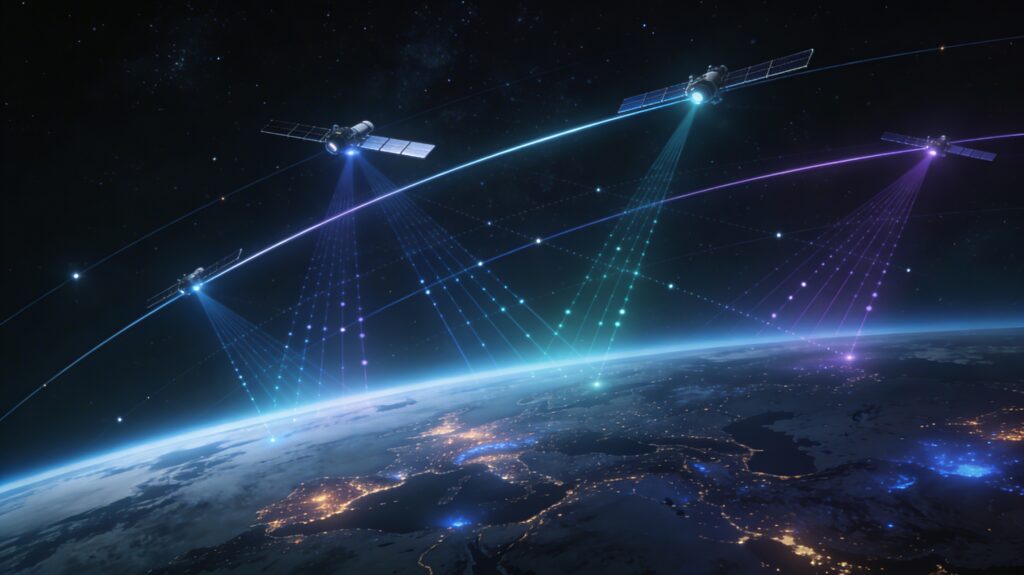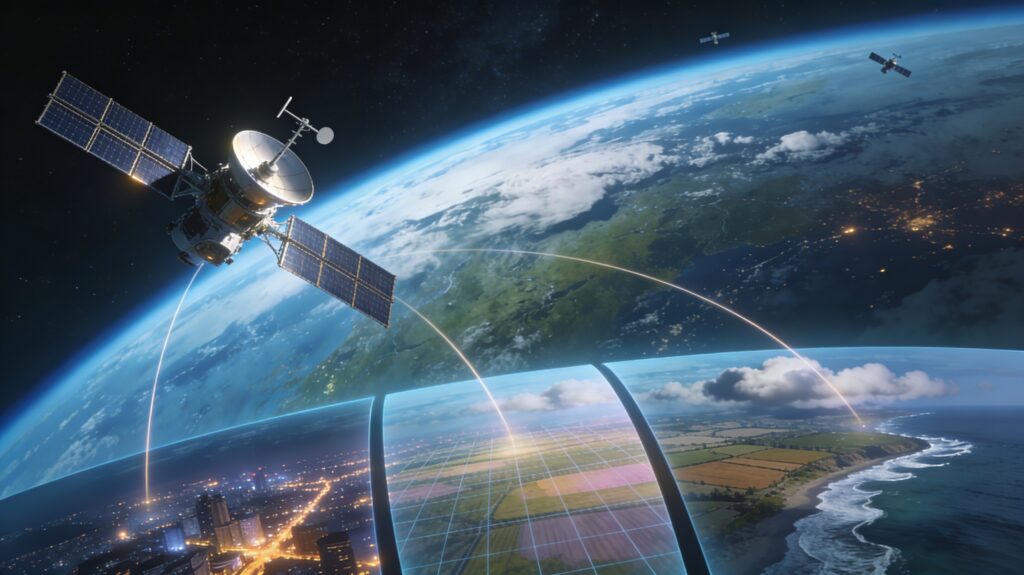
When you think about space technology, what comes to mind? Rockets blasting off with fiery plumes, astronauts floating in zero gravity, or perhaps the iconic images of distant planets? While these captivating visions are indeed part of humanity’s incredible journey into the cosmos, they represent only the very visible tip of a vast iceberg. Beneath the surface, quietly working behind the scenes, is a sprawling network of space technology that influences nearly every aspect of our daily lives here on Earth.
From the moment you wake up and check the weather, to navigating your commute, streaming your favorite show, or even making a secure bank transaction, space-based innovations are constantly at play. Often invisible and taken for granted, these technologies have become so deeply integrated into our modern world that we rarely stop to consider their cosmic origins. This post will pull back the curtain on these silent helpers, revealing how satellites and other space tech quietly support the services we rely on every single day.
Navigating Your World: The Invisible Hand of GPS
Imagine trying to find your way in an unfamiliar city without a map, or coordinating a meeting point with friends using only vague directions. Sounds challenging, right? Thanks to the Global Positioning System (GPS), such scenarios are largely a thing of the past. GPS is perhaps the most ubiquitous example of space technology’s direct impact on our daily lives, yet many don’t realize it relies on a constellation of satellites orbiting our planet.
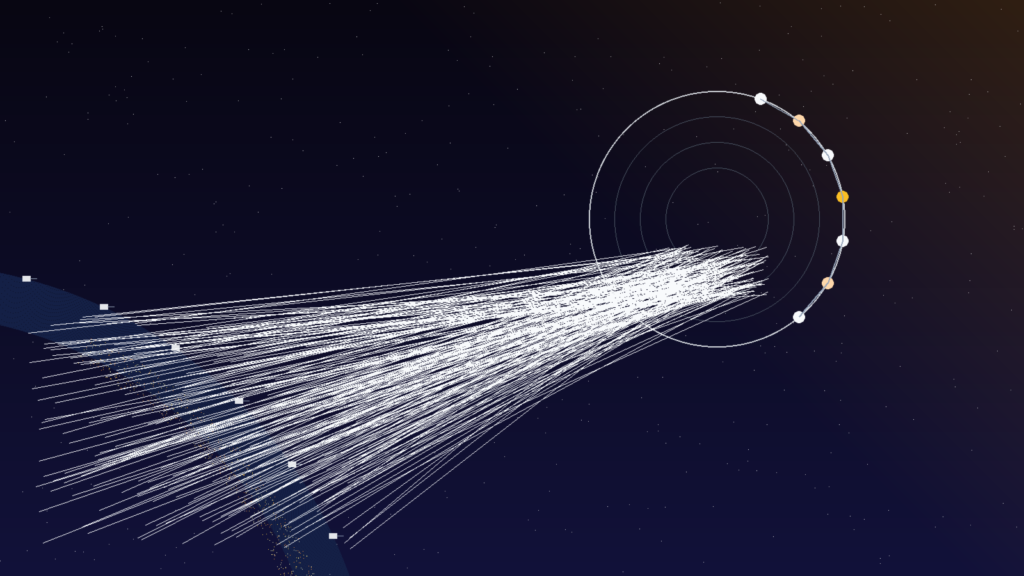
The fundamental principle behind GPS is surprisingly simple: a network of at least 30 satellites constantly orbits Earth, each broadcasting precise timing signals. Your smartphone, car navigation system, or even a fitness tracker receives these signals from multiple satellites simultaneously. By calculating the minuscule time difference it takes for these signals to reach your device, it can pinpoint your exact location down to a matter of meters.
This incredible accuracy powers a multitude of everyday services:
- Mapping and Directions: Apps like Google Maps, Apple Maps, and Waze guide us seamlessly from point A to point B, whether we’re driving, walking, or cycling. They provide real-time traffic updates, suggest alternative routes, and help us discover local businesses.
- Ride-Sharing and Delivery: Services like Uber, Lyft, DoorDash, and Amazon delivery would be impossible without GPS. It allows drivers to find passengers and destinations efficiently, tracks deliveries in real-time, and optimizes logistics for quicker service.
- Emergency Services: When you dial 911 (or your local emergency number), GPS data can help first responders quickly locate you, especially in unfamiliar or remote areas, potentially saving precious minutes in critical situations.
- Financial Transactions: While not directly for navigation, GPS-derived precise timing is vital for synchronizing global financial networks. Banks rely on incredibly accurate timestamps to process transactions, ensuring fairness and preventing fraud across different time zones.
GPS has truly revolutionized how we interact with our physical environment, making our world more navigable, efficient, and safer.
Read More: NOAA – What is GPS?
Forecasting the Future: Weather and Climate from Orbit
Before the advent of weather satellites, forecasting was a much more localized and often less accurate endeavor. Today, thanks to a sophisticated fleet of satellites orbiting Earth, meteorologists can track weather patterns with unprecedented detail and predict severe storms days in advance. These satellites are our eyes in the sky, providing a global perspective that ground-based observations alone could never achieve.
There are two main types of weather satellites:
- Geostationary Satellites: These orbit at a very high altitude (around 35,786 kilometers) above the equator, moving at the same speed as Earth’s rotation. This allows them to “hover” over a specific region, providing continuous, real-time images and data. They are crucial for tracking fast-developing storms like hurricanes and tornadoes.
- Polar-Orbiting Satellites: These orbit at a much lower altitude (around 850 kilometers) and pass over the North and South Poles multiple times a day. As Earth rotates beneath them, they collect data across the entire globe, providing detailed information on temperature, humidity, cloud cover, and atmospheric conditions.
The data collected by these satellites is invaluable:
- Accurate Weather Forecasts: From deciding whether to carry an umbrella to planning major outdoor events, daily weather forecasts are heavily reliant on satellite imagery and data. They help predict everything from sunny days to snowfalls, allowing us to plan our lives more effectively.
- Early Warning Systems: Satellite monitoring is critical for detecting and tracking severe weather phenomena like hurricanes, typhoons, and blizzards. This early warning capability allows communities to prepare, evacuate if necessary, and ultimately saves countless lives and billions of dollars in potential damage.
- Climate Monitoring: Beyond daily weather, satellites play a crucial role in understanding our planet’s long-term climate. They monitor changes in sea levels, track the melting of polar ice caps, observe deforestation, measure atmospheric carbon dioxide levels, and monitor ocean currents. This data is essential for scientists studying climate change and informing policy decisions.
Without our eyes in the sky, our understanding of Earth’s dynamic atmosphere and climate would be drastically limited.
Read More: NOAA – National Environmental Satellite, Data, and Information Service
Connecting the Globe: The Power of Satellite Communications
In an increasingly interconnected world, reliable communication is paramount. While fiber optic cables carry the bulk of our internet traffic, satellites play an indispensable role in ensuring that communication reaches every corner of the globe, bridging digital divides and keeping critical services running.
Communication satellites act as powerful relay stations in space. They receive signals from Earth, amplify them, and then retransmit them to other locations, often thousands of miles away. This capability is particularly vital for:
- Satellite TV and Radio: For millions of households, especially in rural or remote areas where terrestrial cable or fiber infrastructure is sparse, satellite television and radio services (like Dish Network, DirecTV, or SiriusXM) are the primary means of entertainment and news.
- Internet in Remote Areas: Satellite internet providers (such as Starlink, Viasat, and HughesNet) offer internet access to communities and individuals who are beyond the reach of traditional broadband. This is crucial for education, business, and social connection in underserved regions.
- Maritime and Aviation Connections: Ships at sea and aircraft in flight rely heavily on satellite communications for navigation, weather updates, operational communications, and even passenger Wi-Fi. It’s a lifeline for safety and efficiency when out of range of ground-based systems.
- Disaster Relief: When natural disasters strike, ground infrastructure (like cell towers and fiber lines) can be destroyed. Satellite communication systems often remain operational, providing critical links for first responders, aid organizations, and affected populations to coordinate efforts and connect with the outside world.
- Global Telephony: While less common for everyday mobile calls today, satellites still support international phone calls and provide backup for terrestrial networks, ensuring global connectivity.
The ability to bounce signals off a satellite in orbit has created a truly global village, enabling instantaneous communication across vast distances and challenging terrains.
Beyond the Stars: Space Spinoffs on Earth
The pursuit of space exploration has always pushed the boundaries of human ingenuity, leading to incredible technological advancements. While many of these innovations are designed for the harsh environment of space, a surprising number have found practical, life-changing applications right here on Earth. These “spinoff” technologies often go unnoticed, yet they make our lives safer, healthier, and more convenient.
Here are just a few examples of how space research has benefited us:
- Materials Science:
- Memory Foam: Originally developed by NASA for aircraft seats to improve crash protection, memory foam now enhances mattresses, pillows, and athletic shoes, providing unparalleled comfort and support.
- Scratch-Resistant Lenses: The coatings developed to protect astronaut helmet visors from micrometeoroids paved the way for the robust, scratch-resistant lenses used in eyeglasses today.
- Insulation: The highly efficient insulation used in spacecraft to protect against extreme temperatures has found its way into everything from super-insulated homes to emergency “space blankets.”
- Sensors and Imaging:
- Miniaturized Cameras: The demand for small, robust cameras for spacecraft and planetary probes has driven advancements that led to the high-quality cameras in our smartphones and medical endoscopes.
- Water Purification: Technologies developed to recycle water on long-duration space missions have been adapted for use in water purification systems on Earth, providing clean drinking water in disaster zones and remote communities.
- Medical Technology:
- LED Therapy: Originally researched by NASA for growing plants in space and for wound healing in astronauts, LED light therapy is now used in medical settings for pain relief, skin rejuvenation, and even treating certain cancers.
- Artificial Hearts and Defibrillators: Many advancements in miniature, durable pumps and monitoring devices for space missions have contributed to the development of implantable medical devices.
- MRI and CT Scans: While not direct spinoffs, the image processing and enhancement techniques developed for analyzing satellite data and planetary images significantly influenced the development and refinement of advanced medical imaging technologies.
The drive to explore space has undeniably enriched our lives on Earth in countless, often invisible, ways.
Read More: NASA Spinoff – Homepage
The Next Frontier: Future Trends in Space Technology
The space industry is far from stagnant; it’s experiencing a new era of innovation that promises to bring even more profound benefits to everyday life. Two major trends are poised to redefine how we interact with space technology: satellite mega-constellations and advanced Earth observation.
- Satellite Mega-Constellations for Global Internet: Companies like SpaceX (Starlink) and OneWeb are deploying thousands of small, low-orbiting satellites to create vast “mega-constellations.” The goal is to provide high-speed, low-latency internet access to every corner of the globe, including previously unserved or underserved areas. This could revolutionize education, healthcare, and economic development in remote regions, further bridging the digital divide.
- Advanced Earth Observation for a Smarter Planet: The next generation of Earth observation satellites will offer even more detailed and frequent data about our planet. This enhanced capability will have significant impacts:
- Precision Agriculture: Farmers can use satellite data to monitor crop health, soil moisture levels, and nutrient deficiencies with incredible precision. This allows for targeted irrigation and fertilization, reducing waste, optimizing yields, and making farming more sustainable.
- Disaster Response and Mitigation: In the event of natural disasters like floods, wildfires, or earthquakes, satellites can quickly map affected areas, identify damage, and track the spread of hazards. This information is critical for coordinating emergency response, deploying aid, and planning recovery efforts.
- Environmental Monitoring: Satellites will continue to provide increasingly granular data on pollution levels, biodiversity, illegal deforestation, and water resource management, empowering governments and organizations to make more informed environmental decisions.
- Smart Cities and Urban Planning: Detailed satellite imagery can help urban planners monitor growth, traffic patterns, infrastructure development, and green spaces, leading to more efficient and livable cities.
As these technologies mature, the invisible hand of space will become even more pervasive, helping us manage our resources, respond to challenges, and connect with each other in ways we are only just beginning to imagine.
A Universe of Unseen Support
It’s easy to be captivated by the spectacle of space travel and the grand scientific discoveries made light-years away. However, it’s the quiet, consistent work of satellites and the ingenious adaptations of space-derived technologies that truly touch our lives every day. From navigating our commutes and predicting the weather to staying connected and benefiting from medical breakthroughs, the benefits of space technology are woven into the very fabric of our modern existence.
The next time you use your phone for directions, check the forecast, or simply enjoy a reliable internet connection, take a moment to appreciate the invisible network of satellites orbiting high above. They are a testament to human ingenuity, working tirelessly to make our world a more connected, informed, and efficient place – often without us even realizing it. The universe, it turns out, is much closer than you think.
Suggested YouTube Videos for Beginners:
- How GPS Works (Simple Animation): Look for videos explaining GPS with clear, engaging animations that demystify the satellite constellation and signal triangulation.
- Search Term Example: “How GPS Works Explained Animation”
- What Are Satellites and How Do They Work?: A general overview of different types of satellites, their orbits, and their various functions (communication, Earth observation, navigation).
- Search Term Example: “What are Satellites for Kids” or “How Do Satellites Work Simple Explanation”
- Earth Observation Explained: Visuals demonstrating how satellites monitor weather, climate change, and land use, showing real-world examples of the data they collect.
- Search Term Example: “Earth Observation Explained for Beginners” or “How Earth Observation Satellites Work”